
Hear from Our Customers
The biggest thing that changes isn’t visible. It’s knowing that if the ground moves whether it’s a 4.5 you barely feel or something worse your gas line shuts off automatically before a leak has any chance to become a fire. That peace of mind is real, and it’s the reason homeowners across Orangevale are installing these valves now rather than waiting.
Orangevale’s housing stock makes this especially relevant. The majority of homes here were built between 1970 and 1999 before the 1994 Northridge earthquake changed how California thought about gas safety. If your home in Orangevale was built in that window and you haven’t retrofitted a seismic valve, there’s a very strong chance you don’t have one. It’s not a flaw in your home. It’s just a gap in an era of construction that predates the standard.
The local soil composition adds another layer. Orangevale sits in the lower Sierra Nevada foothills, where clay, sandy loam, and adobe soils are common. These soil types shift and contract with Sacramento’s wet-dry seasonal cycle, putting gradual stress on gas line connections at the meter. A properly installed earthquake valve addresses both the sudden seismic event and the cumulative wear that foothill soil conditions create over time.
We founded Murray Plumbing in 2009 and have been serving Sacramento County homeowners including families throughout Orangevale and the surrounding foothill communities of Fair Oaks, Citrus Heights, and Folsom for over 15 years. This isn’t a franchise. There’s no call center routing your job to whoever’s available. When you call, you’re dealing with a team that knows the Sacramento County permit process, knows Orangevale’s housing stock, and shows up when we say we will.
California C-36 License #916322 is the specific plumbing contractor license required by state law to perform gas line work, including earthquake valve installation. You can verify it at cslb.ca.gov in under a minute. That transparency isn’t a marketing move it’s what a contractor with nothing to hide does.
With a 4.7-star Google rating across 93 reviews, the feedback is consistent: on time, price matched the quote, explained everything clearly. In a community like Orangevale, where word travels fast among neighbors, that track record matters.
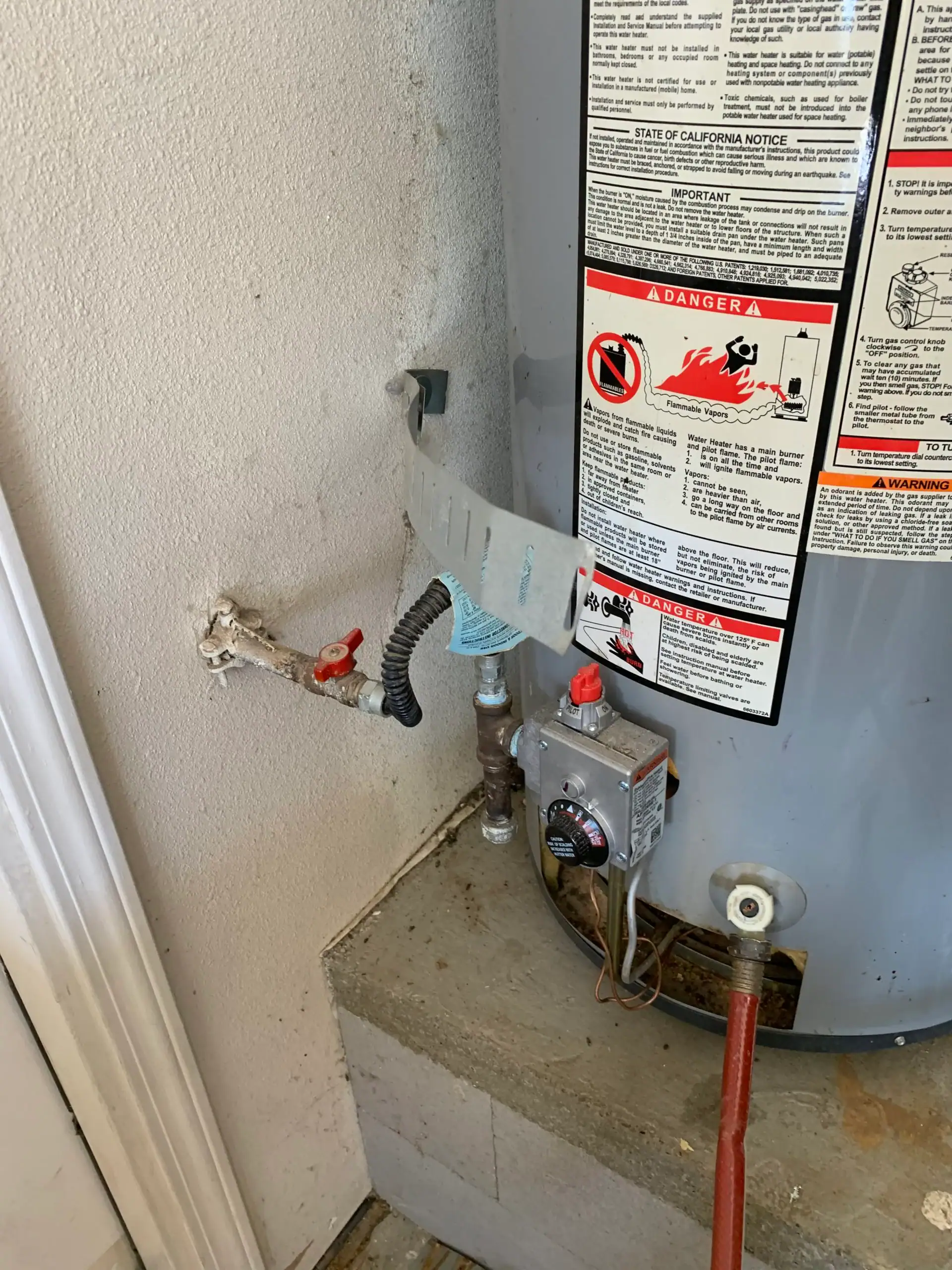
It starts with a free pre-installation assessment. Before any work begins, one of our technicians comes out to your Orangevale home, looks at your gas meter, confirms the right valve size and configuration, and gives you an exact price. If your meter is in a non-standard location which is more common on Orangevale’s larger foothill lots where meters are sometimes set back or partially obscured by landscaping that gets factored in upfront, not added to your bill afterward.
Once you’re ready to move forward, we pull the building permit through Sacramento County’s Department of Community Development. Because Orangevale is an unincorporated community, permits go through the county not a city building department. That distinction matters, and it’s a process we know well. The installation itself typically takes around two hours. A DSA-certified valve is fitted to your gas meter, the system is tested, and everything is confirmed to be functioning correctly before we leave.
After installation, a county inspector signs off on the work, and you receive written documentation of the completed installation. That paperwork is what your insurance company needs, and it’s what protects you in a real estate transaction down the road. We also walk you through what to do if the valve ever trips because knowing how to respond after a seismic event is just as important as having the valve in the first place.

Ready to get started?
Every earthquake valve installation we perform in Orangevale includes the DSA-certified valve, all labor, Sacramento County permit fees, the county inspection, and written documentation of the completed work. The all-in price for most residential installations runs $400–$650. If your specific configuration puts you outside that range, you’ll know why before a single wrench is turned and it won’t be a surprise on the invoice.
DSA certification matters here because Sacramento County requires it. A valve that isn’t on the Division of the State Architect’s approved list won’t satisfy the county permit, won’t satisfy your insurance carrier, and may not perform correctly in an actual seismic event. There’s no shortage of cheaper options online, but none of them check those boxes. Every valve we install does.
If you’re installing because your insurer sent a renewal notice with new requirements which is increasingly common across Sacramento County as California’s insurance market tightens or because a home inspector flagged the absence on a report, the documentation package you receive at the end of this job is exactly what you need to close that loop. Permitted installation, certified valve, written warranty on the workmanship. That’s the full picture, handled in a single visit.
Yes and the permit process in Orangevale works differently than it does in the incorporated cities around it. Because Orangevale is an unincorporated community within Sacramento County, building permits for gas line work are issued by Sacramento County’s Department of Community Development, not a standalone city building department. That’s a distinction that trips up homeowners who assume the process works the same as it does in Folsom or Citrus Heights.
The permit creates a legal record of the installation with the county. That record is required for insurance documentation and must be disclosed in any real estate transaction. Installing a seismic valve without a permit isn’t just inadvisable it’s a code violation under California Plumbing Code Title 24, Part 5, which Sacramento County follows. We handle the permit filing, inspection scheduling, and final documentation as a standard part of every installation. You don’t have to figure out who to call or what forms to submit.
For most residential installations in Orangevale, the all-in cost runs $400–$650. That range covers the DSA-certified valve, all labor, Sacramento County permit fees, the final county inspection, and written documentation of the completed work. There are no separate line items for permit fees or inspection costs the number you’re quoted is the number on the final invoice.
The main variable that can push a job toward the higher end of that range is meter configuration. Some properties in Orangevale’s foothill corridors particularly larger-lot homes where the gas meter is set back from the street or positioned near outbuildings require slightly more work to access and fit correctly. That gets assessed during the free pre-installation visit, so you know the exact price before any work begins. Our customers consistently report that their final invoice came in at or below the original estimate, which is the opposite of what most homeowners expect from a contractor.
It depends on how the installation was done. Insurance carriers in California and Sacramento County homeowners are seeing this more frequently as the state’s insurance market tightens are requiring seismic shut-off valves as a condition of policy renewal, not just offering discounts for having one. When they ask for documentation, they’re looking for two things: a DSA-certified valve and a permitted installation with a county inspection record.
An installation that used a non-certified valve, or one that was done without pulling a permit, won’t satisfy those requirements. You’d be in the position of having paid for an installation that doesn’t close the loop with your insurer. Every installation we perform uses a DSA-certified valve, goes through Sacramento County’s permit and inspection process, and comes with written documentation you can submit directly to your carrier. That’s the complete package your insurer is asking for.
A standard gas shut-off valve is manual you turn it yourself to stop the flow of gas. An earthquake shut-off valve, also called a seismic gas shut-off valve or automatic gas shut-off valve, triggers on its own when it detects ground motion above a certain threshold. You don’t have to be home, awake, or physically present for it to work. The moment seismic activity exceeds the trigger point, the valve closes and gas flow stops.
That automatic response is what matters most in a real earthquake scenario. The 1994 Northridge earthquake caused approximately 14,000 gas leaks and more than 50 structure fires most of which started because gas continued flowing through damaged lines after the shaking stopped. A seismic valve addresses that specific failure point. For homes in Orangevale that were built in the 1970s through 1990s, when this technology wasn’t standard, retrofitting one is the most direct way to close a gap that’s been sitting in your home’s safety profile for decades.
No. PG&E manages the gas distribution system up to your meter. They respond to leaks and emergencies, and they maintain the lines on their side of the connection but installing a seismic shut-off valve on your residential property is not a service they provide. If you call them and ask, they’ll tell you the same thing and direct you to a licensed plumber.
The valve gets installed on your side of the meter, which means it falls under California’s residential plumbing code and requires a C-36-licensed contractor and a building permit through Sacramento County. This is one of the most common reasons Orangevale homeowners delay acting they assume the gas utility handles it, make a call, get redirected, and the project stalls. We hold C-36 License #916322 and handle everything from the initial assessment through the county permit and final inspection. One call gets the whole job done.
Do not reset it yourself. That’s the most important thing to understand about a tripped seismic valve. When the valve closes, it’s doing its job but resetting it before your gas lines have been inspected can introduce gas into a system that may have sustained damage during the event. A line that shifted, cracked, or separated at a fitting won’t be visible from the outside, and resetting the valve before confirming line integrity is how a contained situation becomes a dangerous one.
The right sequence is to call PG&E to report the event and request a line inspection, then contact a licensed plumber to assess your system before the valve is reset. We’re available 24/7, including after felt seismic events when demand spikes and most contractors aren’t reachable. Orangevale sits in Sacramento County’s foothill corridor, where the clay and adobe soils can amplify ground motion and transmit stress to buried gas line connections in ways that aren’t always obvious immediately after a quake. Getting an inspection before resetting is the step that protects you and it’s something we walk every customer through at the end of every installation.
Other Services we provide in Orangevale