
Earthquake Valve Installation
Get a free quote for earthquake valve installation from your local plumbing team.
We’ll contact you about your earthquake valve installation request. Privacy policy
Hear from Our Customers
The honest answer is that nothing feels different until something happens. That’s exactly the point. A properly installed, DSA-certified earthquake shut-off valve means that if the ground moves hard enough to rupture a gas line, your gas supply cuts off automatically before a spark, a flame, or a slow leak turns into something far worse.
For Elverta specifically, this matters more than most people realize. The Sacramento Valley sits on deep alluvial soil the same geology that makes this land so productive agriculturally and that soil can amplify and extend ground shaking from earthquakes that originate miles away. The FEMA National Risk Index confirms Elverta has a relatively elevated earthquake risk. It’s a documented local condition that’s worth taking seriously.
The other thing that changes after installation is paperwork. You’ll have a permitted installation on file with Sacramento County’s Building Permits and Inspection Division a legal record that has real value when you refinance, sell, or file an insurance claim. For homeowners in Elverta, where roughly three out of four residents own their home, that documentation matters. It’s not just safety. It’s protection for your investment.
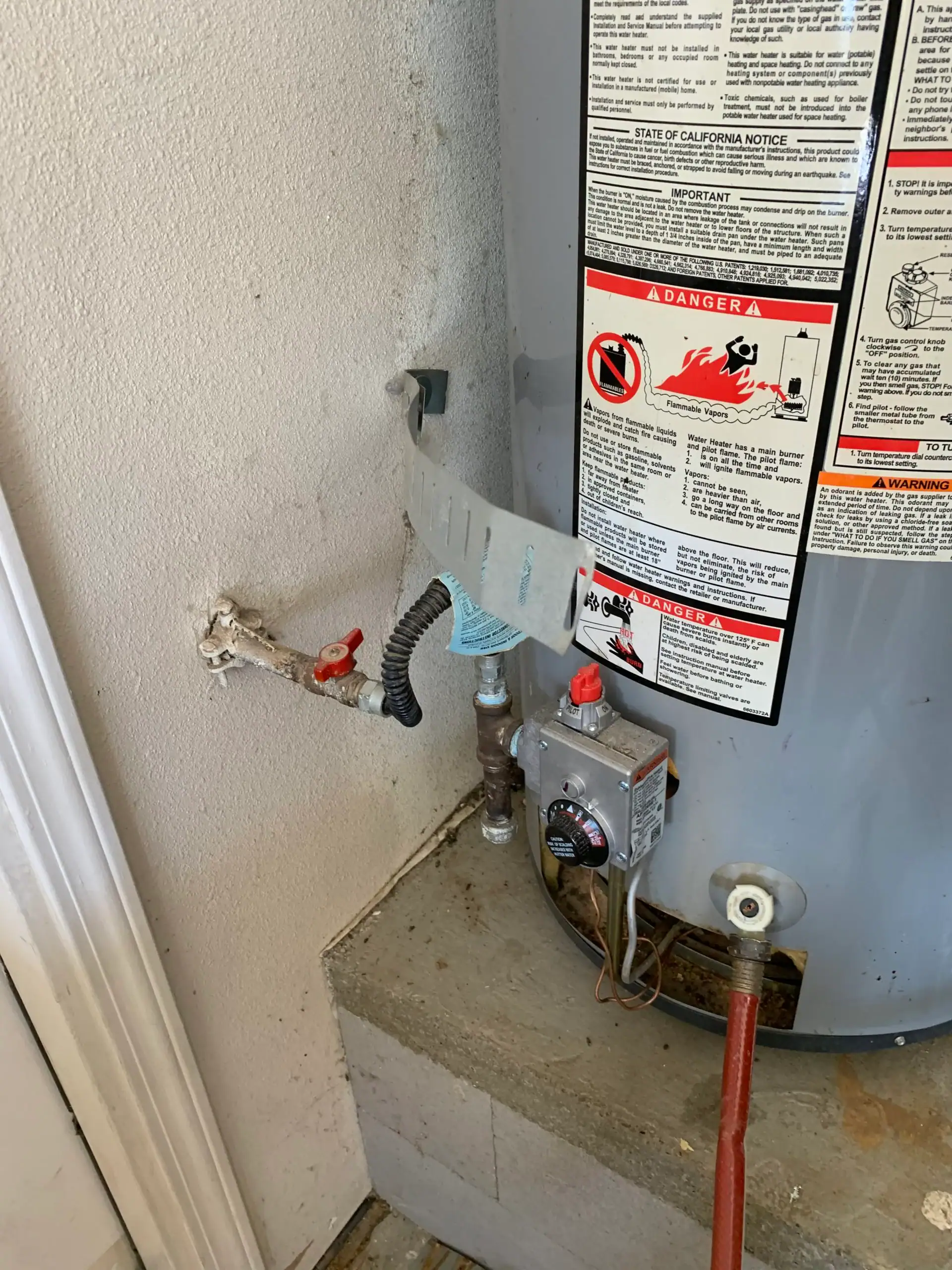
We hold California C-36 License #916322 the specific plumbing contractor classification required by state law for gas line and seismic valve work. You can verify it at cslb.ca.gov in under a minute. That’s not a formality. In Elverta and throughout Sacramento County, where general contractors and handymen are common, knowing who is actually qualified for gas work is a real question worth asking.
Ryan Murray founded our company in 2009 and has been serving Sacramento County homeowners ever since. That includes the older neighborhoods off Elverta Road, the large-lot properties near Gibson Ranch County Park, and the established subdivisions throughout Elverta. We permit and inspect every installation because cutting corners on gas work isn’t a risk worth taking.
With a 4.7/5 Google rating across 93 reviews, our customers consistently report that we show up when we say we will, explain what we’re doing, and our final invoice matches or comes in under the original estimate.
It starts with a free pre-installation assessment. Before any money changes hands, one of our technicians reviews your gas meter setup and confirms the right valve size and configuration for your specific home. This step matters more than people expect many Elverta properties are on larger lots with older meter configurations, and assuming a standard residential setup can lead to the wrong valve being installed. That assessment is also where your all-in price gets confirmed: $400–$650 for most residential installations, covering the DSA-certified valve, labor, permit fees, and written documentation.
From there, we pull the required permit through Sacramento County’s Building Permits and Inspection Division. Because Elverta is an unincorporated community, permits go through the county not a city building department and not every contractor is equally familiar with that workflow. The installation itself is typically completed in a single visit. The valve is mounted at the gas meter, calibrated to trigger at the seismic threshold required by California standards, and tested before our technician leaves.
The final step is the county inspection, which we schedule on your behalf. Once that inspection closes, you have a legal record on file with Sacramento County. Before leaving the job site, our technician also walks you through what to do if the valve trips including why you should not attempt to reset it yourself until a licensed plumber confirms your gas lines are undamaged. That walkthrough is part of the job, not an afterthought.
Ready to get started?
Every earthquake valve installation we perform includes the DSA-certified valve, all labor, permit application, county inspection scheduling, and written documentation of the completed work. The price range of $400–$650 covers all of it for most standard residential installations in Elverta. If your home falls outside that range for any reason an unusual meter location, a non-standard configuration, or an older setup that needs additional work you’ll know before anything begins, not after.
The valves we install are DSA-certified, meaning they’ve passed California’s Division of the State Architect testing requirements for trigger sensitivity, durability, and reset reliability. This is the standard that Sacramento County permit inspections require, and it’s the standard that insurance carriers and real estate disclosures recognize. A valve purchased at a hardware store and self-installed doesn’t meet this bar and it won’t pass a county inspection or satisfy an insurer’s documentation request.
For Elverta homeowners in homes built between the 1950s and 1980s which describes the majority of the housing stock in this community the combination of aging gas infrastructure and the Sacramento Valley’s seismic exposure makes DSA certification more than a checkbox. It’s the difference between an installation that holds up under scrutiny and one that creates problems later. A written workmanship warranty accompanies every installation, and we maintain 24/7 availability so you’re not waiting days to get on the schedule.

Yes and this is one of the details that catches some homeowners off guard. Because Elverta is an unincorporated community, it’s governed by Sacramento County rather than a city. That means permit applications for gas line work, including earthquake shut-off valve installation, go through Sacramento County’s Building Permits and Inspection Division, not a city building department.
We handle the permit application and schedule the required final inspection as a standard part of every installation. You don’t need to navigate the county permit process yourself. Once the inspection closes, the installation is on record with the county which matters when you sell your home, refinance, or need to provide documentation to your insurance carrier. Skipping the permit isn’t just a code violation; it’s a gap in your paper trail that can create real problems down the road.
For most standard residential installations in Elverta, the all-in cost runs $400–$650. That includes the DSA-certified valve, labor, permit fees, and written documentation. There are no separate line items added after the fact.
The free pre-installation assessment is how that number gets confirmed for your specific Elverta home. Many properties in Elverta are on larger lots with older meter configurations homes built in the 1960s and 1970s don’t always have the same setup as newer construction. The assessment ensures the right valve is selected for your meter size and location, and it’s also where your exact price is locked in before any work begins. If anything about your installation would push the cost outside that range, you’ll hear about it during the assessment not on the final invoice.
DSA stands for California’s Division of the State Architect. A DSA-certified earthquake valve has been tested and verified to meet California’s standards for trigger sensitivity, durability, and reset reliability. In plain terms, it means the valve will actually do what it’s supposed to do when the ground moves and that it won’t trip from normal vibrations like passing trucks or agricultural equipment, which is a legitimate concern for homeowners in semi-rural areas like Elverta.
The certification matters for three practical reasons. First, Sacramento County permit inspections require it a non-certified valve won’t pass. Second, insurance carriers increasingly require documentation of a certified installation when processing claims or evaluating coverage. Third, real estate disclosures during a home sale need to reflect a compliant installation. A valve that doesn’t meet DSA standards creates gaps in all three areas. We install only DSA-certified valves, which means the installation holds up under every form of scrutiny it’s likely to face.
This is one of the most common questions from homeowners in semi-rural areas like Elverta, and it’s a fair one. DSA-certified earthquake valves are calibrated to trigger at a horizontal ground acceleration of approximately 0.2g the threshold associated with meaningful seismic activity. Normal vibrations from road traffic on Elverta Road, agricultural equipment on nearby properties, or even large trucks don’t come close to that threshold.
The calibration is precise enough that false triggers from everyday activity are not a realistic concern with a properly installed, certified valve. Where accidental trips do happen, it’s usually with uncertified, lower-quality valves that don’t meet California’s testing standards which is exactly why DSA certification matters. If your valve ever does trip, the protocol is straightforward: don’t attempt to reset it yourself. Call a licensed plumber first to confirm your gas lines are intact, then follow the proper sequence for restoring service. We walk every customer through that process before leaving the job site.
No. PG&E provides natural gas service to Elverta and the surrounding Sacramento County area, and they respond to gas emergencies and leaks. But installing seismic shut-off valves is not a service they offer. If you call them about it, they’ll direct you to hire a licensed plumbing contractor.
In California, gas line work including earthquake valve installation requires a C-36 plumbing contractor license. That’s the classification that authorizes a contractor to legally perform this type of work. We hold C-36 License #916322, which is verifiable at cslb.ca.gov. This distinction matters because some homeowners wait, assuming the utility will eventually handle it or notify them when it’s required. That notification doesn’t come. The responsibility falls on the homeowner, and the right contractor to call is a C-36-licensed plumber not a general handyman, not a general contractor, and not the gas company.
The Sacramento Valley sits on a deep layer of alluvial soil sediment deposited over thousands of years by rivers and floodwaters. That soil type has a documented tendency to amplify and extend ground shaking from earthquakes, even when the source of that earthquake is far away. It’s the same reason a Bay Area earthquake can be felt meaningfully in Sacramento County communities like Elverta, even though the fault is 80 or more miles away.
Updated seismic hazard mapping released in 2025 confirms that Sacramento’s earthquake risk is driven not just by proximity to major fault lines, but by background seismicity smaller, less predictable seismic events combined with these amplification effects. The FEMA National Risk Index identifies Elverta as having a relatively elevated earthquake risk for exactly this reason. The 1994 Northridge earthquake, a 6.7-magnitude event, caused approximately 14,000 gas leaks and more than 50 structure fires in ordinary California neighborhoods. The soil conditions in Elverta don’t make a major seismic event inevitable, but they do make the consequences of one more significant than the distance from a fault line alone would suggest.
Other Services we provide in Elverta