
Hear from Our Customers

The most immediate thing that changes is your paper trail. You’ll have a DSA-certified valve on your gas line, a pulled El Dorado County building permit, a completed inspection record, and written documentation you can hand directly to your insurance agent or escrow officer. That’s not a small thing in Rescue, where the insurance conversation has gotten harder every year.
Rescue sits in a high wildfire danger area with limited fire hydrant coverage the Rescue Fire Department has documented this publicly. That reality has pushed insurers to scrutinize every aspect of a home’s risk profile, not just wildfire exposure. An earthquake valve is one of the few documented safety upgrades that directly addresses a second hazard category on that list. Installing one doesn’t just protect your gas line it strengthens your case with your carrier at a time when that case needs to be as strong as possible.
There’s also the housing stock reality in Rescue. A significant number of homes along the Green Valley Road corridor and the surrounding rural areas were built in the 1970s and 1980s, well before seismic shut-off valves were standard practice. If your home is 40 or more years old and you’ve never had this conversation with a plumber, there’s a reasonable chance your gas line has never been protected by one. That’s a two-hour fix and one that doesn’t need to wait.
We were founded in 2009 and hold California C-36 License #916322 the specific contractor classification required by state law to perform gas line and seismic valve work. You can verify that license yourself at cslb.ca.gov in about 30 seconds. Not every contractor offering this service holds a C-36. We do, and we’re not shy about saying so.
We’ve been serving the Northern California foothill region for over 15 years, including unincorporated El Dorado County communities like Rescue. That matters here specifically because permits in Rescue don’t run through a city building department they run through El Dorado County. We know that process, handle it as a standard part of every installation, and don’t leave you to figure out which agency to call.
With a 4.7/5 Google rating across 93 reviews, the feedback is consistent: on time, clear about pricing, and the final invoice rarely comes in above the original estimate. In a market full of contractors who overpromise, that track record is worth paying attention to.
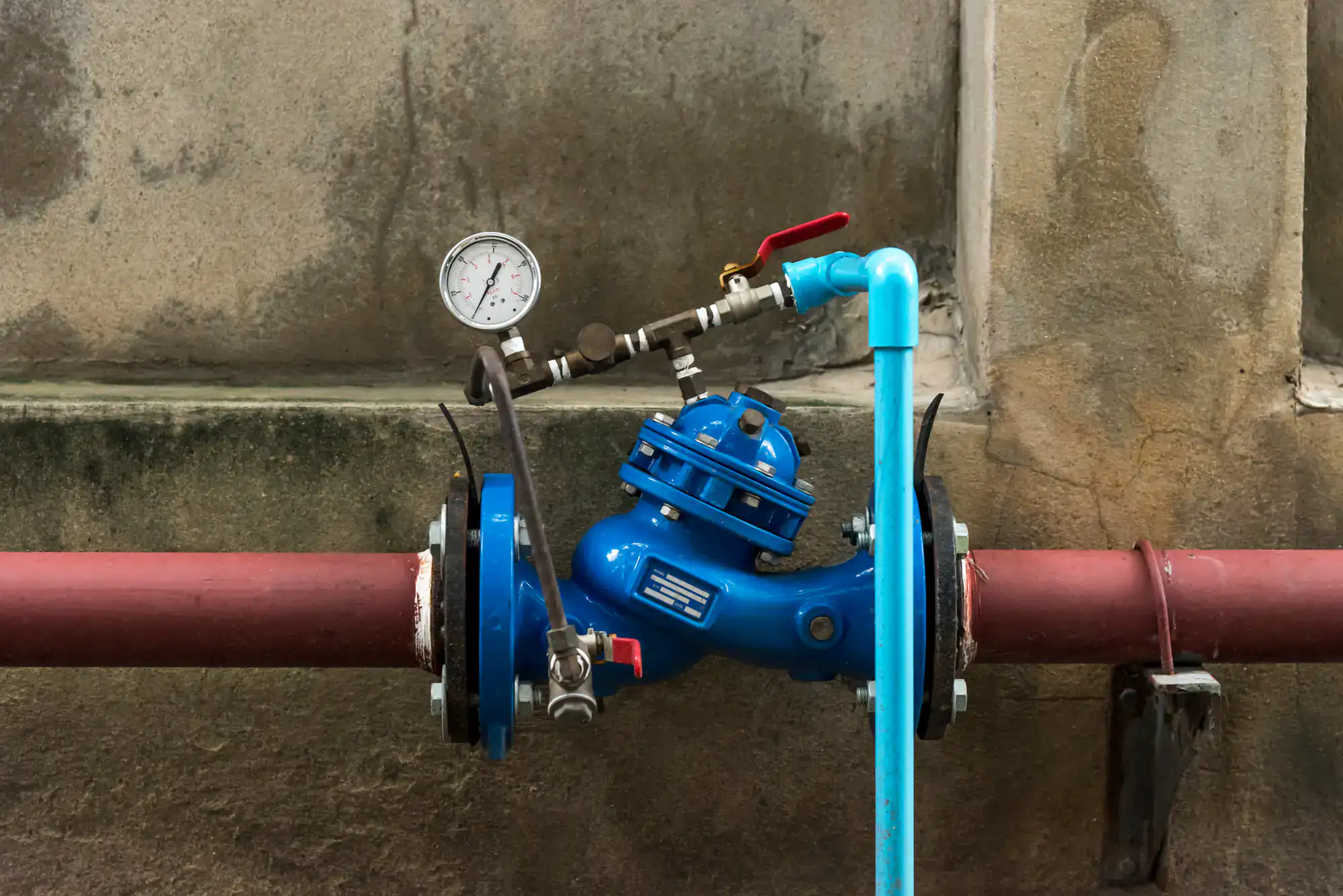
It starts with a free pre-installation assessment. Because Rescue’s housing stock is varied older rural homes, newer residential developments, agricultural properties gas meter configurations differ more here than in a standard suburban market. Some meters are in unusual locations, mounted on outbuildings, or set up in ways that affect the installation approach. The assessment confirms your exact setup and gives you a firm price before any commitment is made. The all-in range for most residential installations in Rescue runs $400–$650, and that includes the valve, labor, El Dorado County permit fees, and written documentation.
Once you’ve confirmed the scope and price, the installation itself typically takes around two hours. We install only DSA-certified valves the California Division of the State Architect standard that satisfies county permit requirements, insurance documentation, and real estate disclosure obligations. This isn’t a valve you order online and drop in yourself. It’s a certified device installed by a C-36 licensed plumber with a permit pulled and an inspection scheduled through the El Dorado County Building Department.
After the inspection clears, you walk away with three things: a written workmanship warranty, a copy of the permit and inspection record, and documentation of the specific DSA-certified valve brand and model. If your insurance agent, real estate agent, or escrow officer asks for proof of installation, you have it in writing, on file, and ready to hand over.
Ready to get started?
Every earthquake valve installation we perform in Rescue includes the DSA-certified valve and all associated hardware, labor, El Dorado County building permit fees, a scheduled county inspection, and a full written documentation package. The $400–$650 all-in price range covers the complete job. There are no line items added after the fact for permit processing, travel to the county building department, or inspection coordination. What’s quoted in the assessment is what you pay.
Because Rescue is an unincorporated community, the permitting process works differently than it does in neighboring cities like Folsom or El Dorado Hills. There’s no city building department here it’s El Dorado County that administers permits and inspections for properties in the 95672 zip code. We handle that process entirely, which means you don’t have to navigate a county system you’ve never dealt with before just to get a gas valve installed correctly.
One thing worth knowing before you schedule: this service applies to homes with natural gas service. Some rural properties in the Rescue area use propane rather than PG&E natural gas, and the installation approach can differ. The free pre-installation assessment will confirm your setup and whether any adjustments are needed. If you’re not sure what you have, that’s exactly what the assessment is for no commitment required to find out.
Yes and because Rescue is an unincorporated community, that permit comes from El Dorado County, not a city building department. This is something a lot of Rescue homeowners don’t realize. There’s a common assumption that unincorporated areas have looser permit requirements, but that’s not how it works. County permit requirements apply just as they would in any incorporated city, and an unpermitted installation creates real liability for insurance claims, for real estate transactions, and for your own protection if something goes wrong.
We pull the El Dorado County building permit and schedule the county inspection as a standard part of every installation. You don’t have to contact the county yourself, figure out which department handles it, or track down the inspection afterward. The permit record becomes part of your documentation package, and it’s the kind of paper trail that has real value when your insurance agent or a buyer’s inspector asks whether the work was done correctly.
For most residential installations in Rescue, the all-in cost runs $400–$650. That range covers the DSA-certified valve, labor, El Dorado County permit fees, and the written documentation package. It’s not a starting price that grows once someone looks at your meter it’s the actual range for the complete job, based on the specific configurations we see most often in this area.
The reason there’s a range rather than a flat number is that Rescue’s housing stock is genuinely varied. Older homes on larger rural lots sometimes have meters in locations that require additional work mounted on outbuildings, partially buried, or in configurations that differ from a standard suburban setup. The free pre-installation assessment exists specifically to account for this. One of our technicians will look at your meter, confirm your setup, and give you an exact price before any work begins. No rural premium, no surprise add-ons. The number you get in the assessment is the number on the invoice.
Increasingly, yes though it depends on your specific carrier and policy. What’s changed in El Dorado County over the past few years is the broader tightening of underwriting standards driven by wildfire risk. As insurers have pulled back from high-risk foothill communities, they’ve also become more aggressive about flagging any undocumented safety gaps and the absence of a seismic gas shut-off valve is showing up more frequently in renewal conversations and policy reviews.
Rescue sits in a documented high wildfire danger area with limited fire hydrant infrastructure. That context puts Rescue homeowners in a position where your insurance carrier is already under pressure, and any additional safety gap can complicate coverage. A DSA-certified valve with a permit on file is the specific documentation that satisfies most insurer requests in this category. If your carrier has flagged this issue or you’re heading into a renewal and want to get ahead of it, the free assessment is the right first step it costs nothing and gives you a clear picture of what’s involved.
DSA stands for California Division of the State Architect. A DSA-certified earthquake valve is one that has been tested and approved to meet the California standard for seismic gas shut-off devices. That certification is what makes the valve acceptable for building permit purposes, insurance documentation, and real estate disclosure requirements in California including in El Dorado County.
The reason certification matters practically is that not all valves are equal, and not all installations are equal. A valve purchased online and installed without a permit may physically shut off gas after a seismic event, but it won’t satisfy your insurer’s documentation requirement, it won’t appear in your permit record, and it won’t hold up in a real estate transaction if a buyer’s inspector or escrow officer asks for proof. We install only DSA-certified valves, and every installation is permitted and inspected through El Dorado County. The certification isn’t a technicality it’s what makes the installation actually count for the purposes that matter most to you.
Technically, some homeowners attempt this but in California, gas line work requires a C-36 licensed plumber, and the installation needs to be permitted and inspected to be legally compliant and insurer-recognized. A self-installed valve that hasn’t been permitted through El Dorado County doesn’t create a legal record of the work, which means it won’t satisfy an insurance documentation request and won’t appear in your property’s permit history when you go to sell.
There’s also a practical issue specific to Rescue’s older housing stock. Homes built in the 1970s and 1980s sometimes have gas line configurations that aren’t immediately obvious older fittings, non-standard meter placements, or setups that require specific hardware to install a valve correctly. Getting it wrong on a gas line isn’t a minor inconvenience. The cost of a professional installation $400–$650 all-in, with a free assessment upfront is low relative to the risk of an unpermitted or incorrectly installed valve on a property you own.
Yes. Rescue is within our El Dorado County service area, and same-day assessments are available in most cases. The 24/7 availability is relevant here because demand for earthquake valve installations in foothill communities doesn’t always follow a Monday-through-Friday schedule. After a felt seismic event even a minor one the urgency is real and it doesn’t wait until business hours. We’re reachable around the clock for exactly that reason.
Rescue residents are also accustomed to longer wait times from service providers who treat the foothill communities as secondary to their Sacramento metro core. Our response time and punctuality are among the most consistent themes in our customer reviews, and that holds for El Dorado County service calls. If you’re on Green Valley Road, Bass Lake Road, or anywhere in the 95672 zip code and you need this done quickly whether it’s insurance pressure, a real estate deadline, or post-earthquake urgency the process starts with a free assessment and can move as fast as your schedule allows.
Other Services we provide in Rescue