
Hear from Our Customers
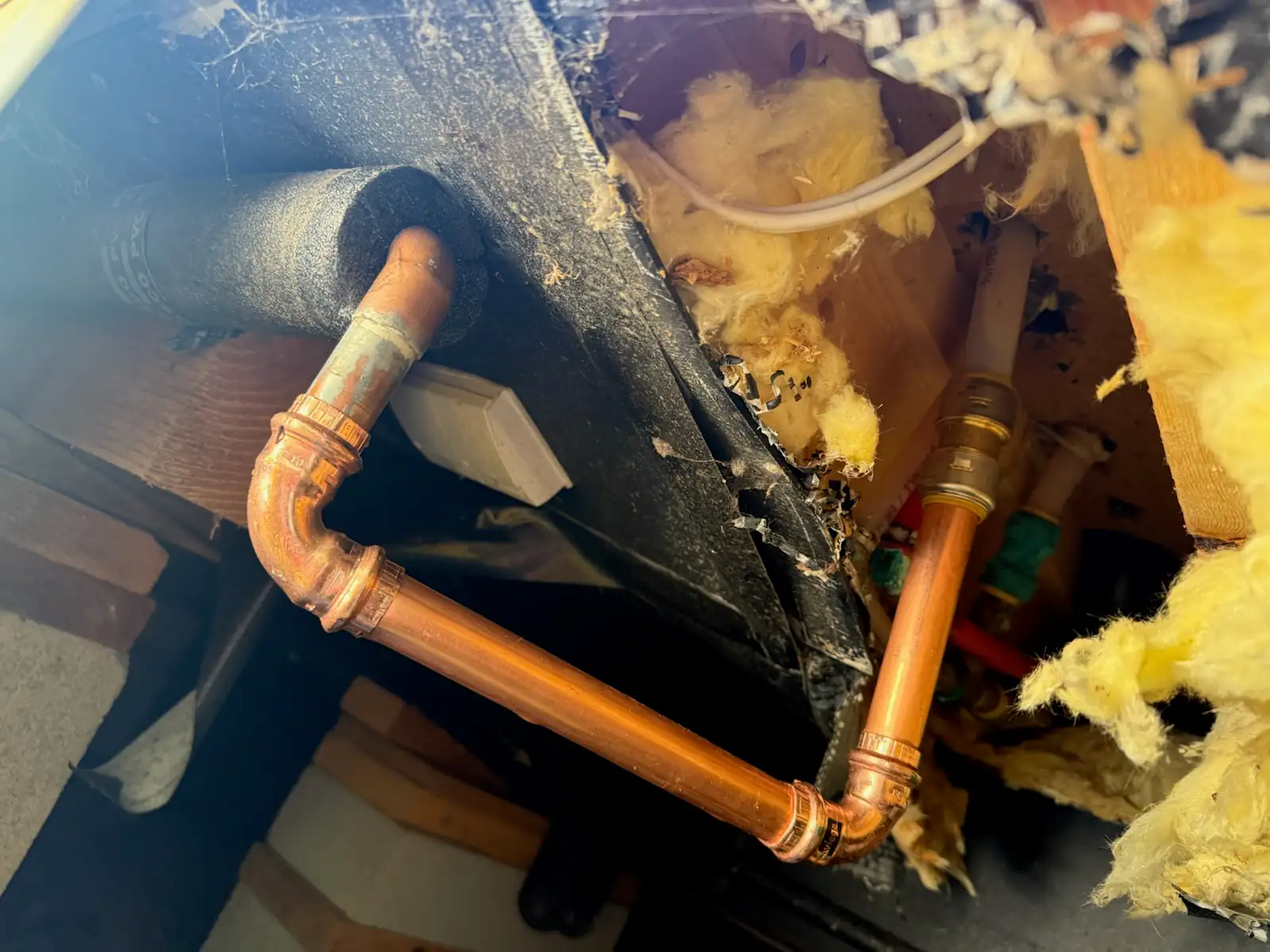
Most water damage doesn’t announce itself. It starts small a pinhole in a copper line, a slow drip behind drywall, a supply fitting that finally gives out on a Tuesday morning while you’re on Highway 50 heading toward Sacramento. By the time you’re home, the damage is already done. A professionally installed whole house leak detection system in Rescue, CA changes that equation entirely. The system monitors your water supply around the clock, catches abnormal flow patterns the moment they start, and shuts off your main line automatically before a manageable problem becomes a $15,000 insurance claim.
For Rescue homeowners specifically, this matters more than it might in a denser suburb. Properties here tend to sit on larger lots, often with well water systems, detached structures, and longer runs of pipe that a single point-of-use sensor under the kitchen sink will never cover. And at 1,214 feet in the El Dorado foothills, winter overnight temperatures regularly drop to the freeze threshold which means exposed pipes and outdoor supply lines on acreage properties carry real seasonal risk. A smart water leak detection system built for your whole property is the only approach that actually matches the scale of what you’re protecting.
The other thing worth knowing: many homeowners insurance carriers offer 5% to 10% off your annual premium once a qualifying leak detection system is installed. On a Rescue home valued at $700,000 or more, that’s a discount that can recover the cost of installation within a year or two.
We founded Murray Plumbing in 2009 as a one-truck operation, and we’ve spent the last fifteen years building our reputation across El Dorado County including Rescue and the surrounding foothills communities. We’re based in Placerville, the county seat, which puts Rescue squarely in our primary service area, not at the edge of it. We know the difference between a Rescue acreage property on a private well and a tract home in Cameron Park on city water because we’ve worked on both, repeatedly.
We hold California Contractor’s License #916322 (C-36 classification), verifiable at CSLB.ca.gov. That license is required by California law for any plumbing work exceeding $500, including whole-home shutoff system installation on a main supply line. In a rural-residential market like Rescue, where unlicensed work on acreage properties isn’t unheard of, a specific and verifiable license number isn’t a formality it’s proof.
Our 4.7 out of 5 Google rating is based on 93 verified reviews from real homeowners in the El Dorado County service area. Customers consistently mention punctuality, honest pricing, and final invoices that matched or came in under the original estimate.
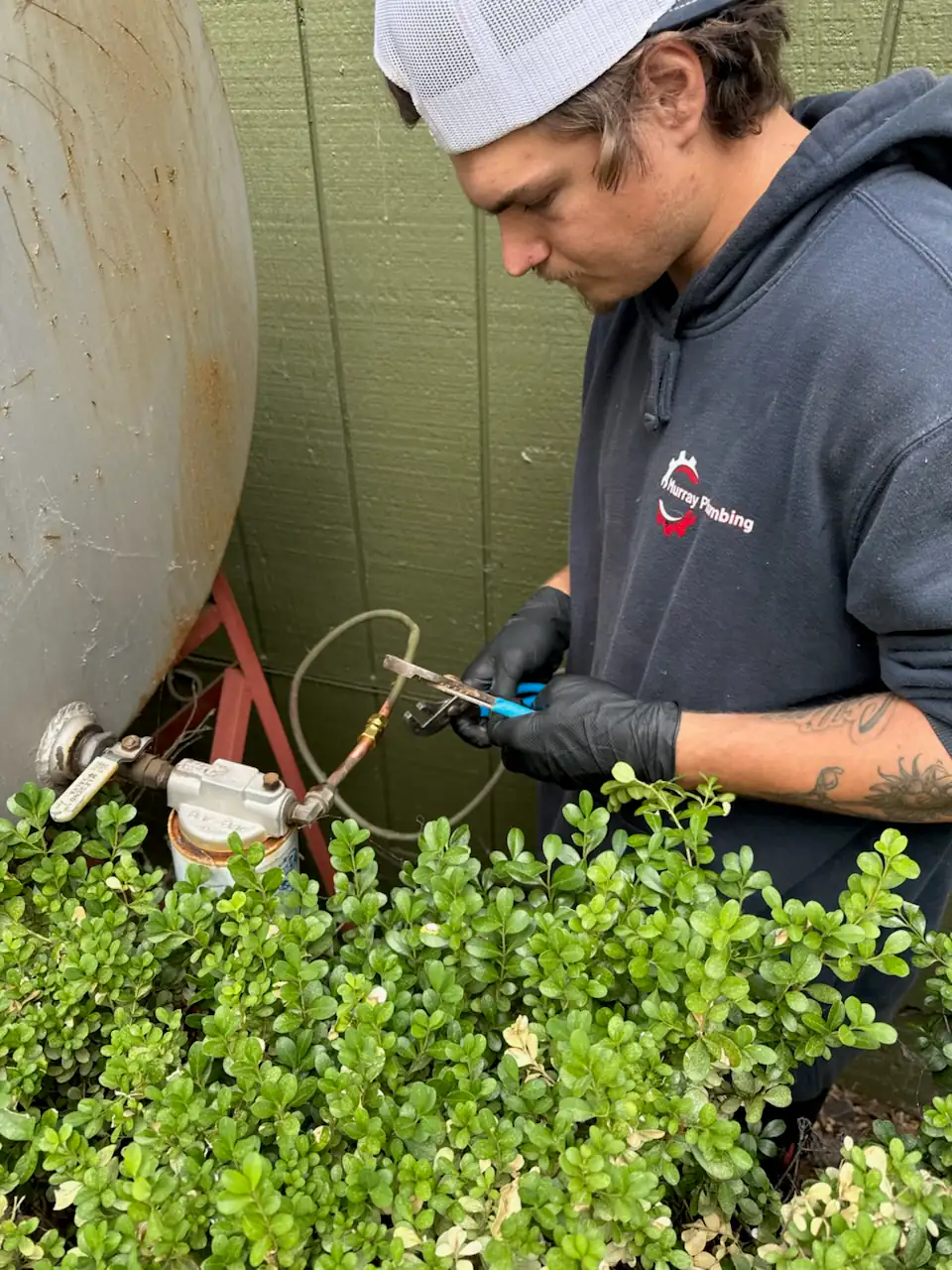
It starts with a conversation, not a sales pitch. Before anything gets installed, we assess your home’s full plumbing layout where your water enters the property, how your supply lines are routed, whether you’re on a private well or a municipal connection, and how many structures on your lot need coverage. Rescue properties vary significantly: a single-family home on a half-acre looks very different from a multi-structure ranch on two acres with a private well and a detached shop. The system has to be sized and positioned correctly for your specific setup, not a generic template.
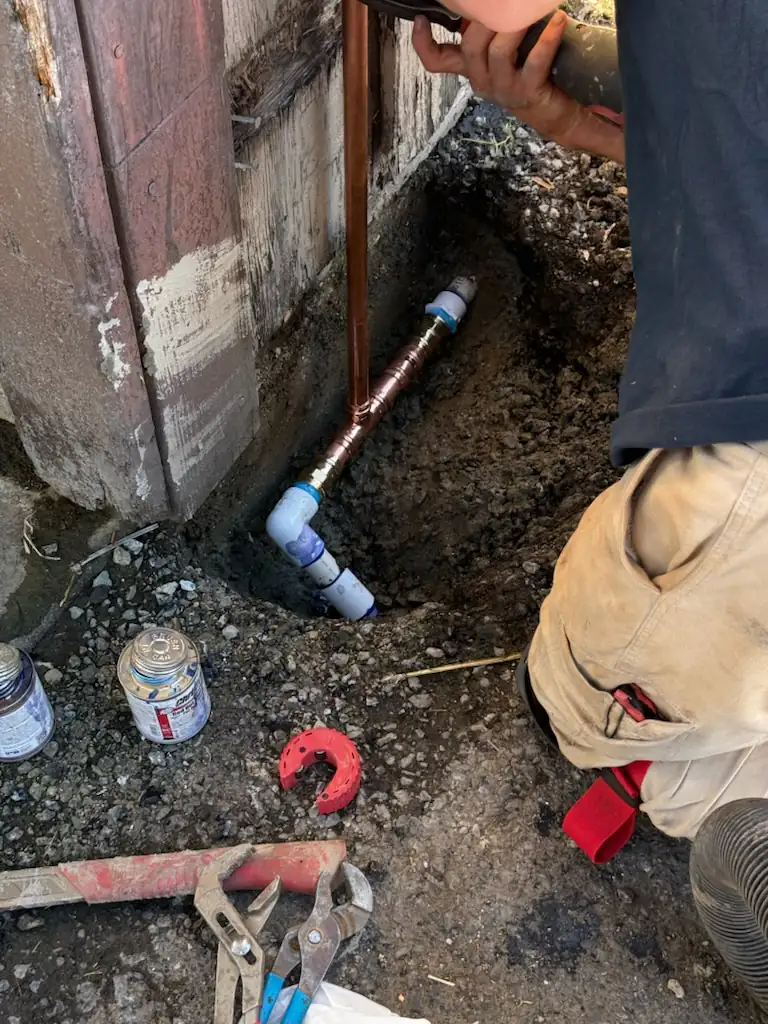
Once the assessment is done, the main shutoff device gets installed at the right point on your supply line after the meter and pressure regulating valve, as required by California plumbing code and manufacturer specifications. Because this involves work on your main water line, it falls under the permit requirements governed by El Dorado County’s Building Division for unincorporated areas like Rescue. We handle that process as a licensed C-36 contractor.
After installation, the system gets connected to your home Wi-Fi and the Moen Smart Water App gets configured on your phone. Alert thresholds get set, the full system gets tested, and before we leave, you get a hands-on walkthrough of how to monitor your water usage, read alerts, and trigger a remote shutoff from your phone. When we leave, the system is live not just sitting in a box waiting to be figured out.
Ready to get started?
The automatic water leak detection systems we install are whole-home solutions, not individual sensors placed under sinks. The Moen Flo system one of the primary systems we work with monitors your entire water supply at the point of entry, detecting flow anomalies as small as a single drop per minute. It tracks usage patterns over time, learns what normal looks like for your home, and flags anything that falls outside that baseline. If something triggers the system, it closes your main shutoff valve automatically and sends an alert to your phone.
For Rescue homeowners on private wells, this matters in a specific way. Without a monthly utility bill flagging unusual consumption, a slow leak in a buried supply line or a failing pressure tank can go unnoticed for months. The Moen Flo system gives well-water properties the same continuous oversight that a utility meter provides except it acts on what it finds instead of just recording it.
The gabbro and rocky soil conditions around the Pine Hill area of Rescue also create real underground plumbing stress that homeowners in Sacramento’s flatlands simply don’t deal with. Pipes under that kind of ground are harder to excavate and more expensive to repair. Catching a problem early before it becomes a major dig is where a properly installed automatic water leak detection system in Rescue, CA earns its cost many times over.
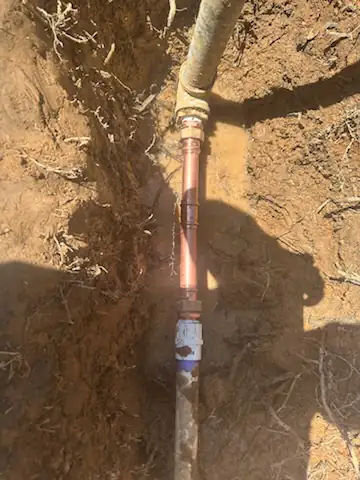
Yes, and honestly, well-water properties are some of the best candidates for this type of system. When you’re on a municipal water connection, your utility bill gives you at least a monthly signal that something might be off. On a private well in Rescue, you don’t have that. A slow leak in a supply line, a failing pressure tank, or a stuck irrigation valve can run for weeks without any visible sign and by the time you notice, you’re looking at real structural damage or a depleted well.
The Moen Flo system monitors flow at the point where water enters your home’s plumbing, regardless of whether that source is a municipal main or a private well. We configure the system specifically for the pressure profiles and flow patterns typical of well-water properties in El Dorado County, so the alert thresholds reflect what normal actually looks like for your setup not a generic baseline built for a city water connection.
A point-of-use leak sensor the kind you buy at a hardware store and set on the floor under a sink or near a water heater detects moisture after it’s already present. It tells you water is there. That’s useful, but it’s reactive. By the time that sensor goes off, water has already reached the floor.
A whole-home automatic shutoff system like Moen Flo works differently. It monitors the flow of water through your main supply line continuously, looking for patterns that indicate a problem a slow trickle that shouldn’t be there, a sudden spike consistent with a burst pipe, or sustained flow when no fixtures are in use. When it detects something outside your home’s normal baseline, it closes the main shutoff valve automatically. No water reaches the floor. No damage accumulates while you’re sitting in traffic on Highway 50 or spending the weekend up at Lake Tahoe. The two types of systems aren’t really competing but if you’re protecting a high-value property in Rescue on a large lot with multiple structures, a whole-home shutoff system is the one that actually matches the scale of your risk.
It depends on what’s being installed. A standalone point-of-use sensor that sits on the floor and plugs into an outlet doesn’t require a permit. But a whole-home shutoff system which involves cutting into and modifying your main supply line is a different category of work entirely. That type of installation falls under California plumbing code and requires a licensed C-36 contractor for any project exceeding $500 in labor and materials.
Because Rescue is an unincorporated community, all permit oversight runs through El Dorado County’s Building Division rather than a city building department. We hold California Contractor’s License #916322 and handle the permitting process as part of the installation. This matters beyond just legal compliance if a water damage claim ever goes to your insurance carrier, a documented, permitted installation by a licensed contractor is a much stronger position than a DIY job that technically voided your warranty and may not meet code.
Rescue sits at 1,214 feet in the El Dorado foothills, and January overnight temperatures average right around 37°F which means cold snaps that drop below freezing are a regular part of winter here. For homes on larger lots with exposed outdoor supply lines, pipes in uninsulated crawl spaces, or plumbing running to detached structures, that’s a real and seasonal risk.
When a pipe freezes and bursts, the damage doesn’t happen at the moment of freezing it happens when the pipe thaws and water starts moving again at full pressure through a compromised section. If that happens while you’re at work or away for the weekend, a whole-home shutoff system is the only thing standing between that event and a flooded home. The Moen Flo system detects the sudden high-volume flow signature of a burst pipe and closes the main shutoff valve in seconds. The damage is limited to what happened before the system responded not the hours or days it might take someone to notice otherwise.
Many homeowners insurance carriers offer discounts of 5% to 10% on annual premiums when a qualifying smart water leak detection system is installed and documented. The exact discount depends on your carrier and your specific policy, so the best step is to contact your insurance agent before installation and ask specifically about smart water sensor credits.
What’s worth understanding is the math behind it. On a Rescue home with a median value around $711,000 and many properties well above that your homeowners insurance premium is likely substantial. A 5% to 10% discount on that premium, applied annually, can recover the cost of a professional installation within one to two years. Beyond the premium savings, the more significant financial protection is what the system prevents: the average water damage insurance claim runs between $13,954 and $15,400, and gradual leaks that develop slowly over time are frequently categorized as maintenance issues by insurers and denied. A smart detection system catches those slow leaks before they become claim-level events.
We’re based in Placerville El Dorado County’s county seat which puts Rescue squarely within our primary service area, not at the edge of it. Rescue is roughly 20 to 25 minutes from Placerville via local roads, and El Dorado County is where we’ve worked since we founded Murray Plumbing in 2009. We know the difference between a Rescue acreage property on a private well and a tract home in Cameron Park on city water because we’ve worked on both, repeatedly, for over fifteen years.
Our California Contractor’s License #916322 is active and verifiable at CSLB.ca.gov. Our 4.7 out of 5 Google rating is based on 93 reviews from real homeowners in the El Dorado County area not a national review aggregate. And our 24/7 emergency service means that if your smart detector fires an alert at 10 PM on a Friday night, you’re calling a local team that can actually respond not leaving a voicemail for a regional dispatch center to sort out Monday morning.
Other Services we provide in Rescue