
Hear from Our Customers
Most Sacramento homeowners don’t find out about a leak until they smell something, see a stain, or open a water bill that doesn’t make sense. By then, the damage is already done and what started as a slow drip behind a wall has quietly soaked into your subfloor, your drywall, and your wallet.
A whole house leak detection system changes that entirely. Instead of waiting for a visible sign, you get an alert the moment something’s off and if you’re not home to act on it, the system shuts the water off automatically. For anyone pulling long hours at a state agency downtown, working shifts at UC Davis Health, or traveling for work, that automatic shutoff isn’t a nice-to-have. It’s the only line of defense your home has while you’re gone.
Sacramento’s clay-heavy soil makes this even more critical. That soil expands every wet season and contracts every dry summer, and that constant movement puts stress on pipes running under slab foundations especially in homes built between the 1950s and 1990s. Combine that with the mature oak and elm root systems threading through the ground in neighborhoods like East Sacramento and Land Park, and you’ve got a plumbing environment that’s working against you whether you know it or not. A smart leak detection system doesn’t fix the soil or the roots but it makes sure you find out the moment something gives way.
We’ve been serving Sacramento County homeowners since 2009. Founded by Ryan Murray, Murray Plumbing holds California Contractor’s License #916322 a C-36 plumbing classification you can verify right now at CSLB.ca.gov before you ever pick up the phone. That license is required by California law for any main water line work, which is exactly where a whole-home smart shutoff system gets installed.
Our 4.7-star Google rating across 93 verified reviews comes from customers in Sacramento, El Dorado County, and Placer County who left their feedback on their own after the job was done. What they consistently mention: we showed up when we said we would, explained the work clearly, and the final cost came in at or below the original quote. No estimate fees, no surprise invoices.
Sacramento County is one of our three core service territories. From Natomas to Midtown to the Pocket neighborhood along the Sacramento River, we’re not a crew learning your area on the job.
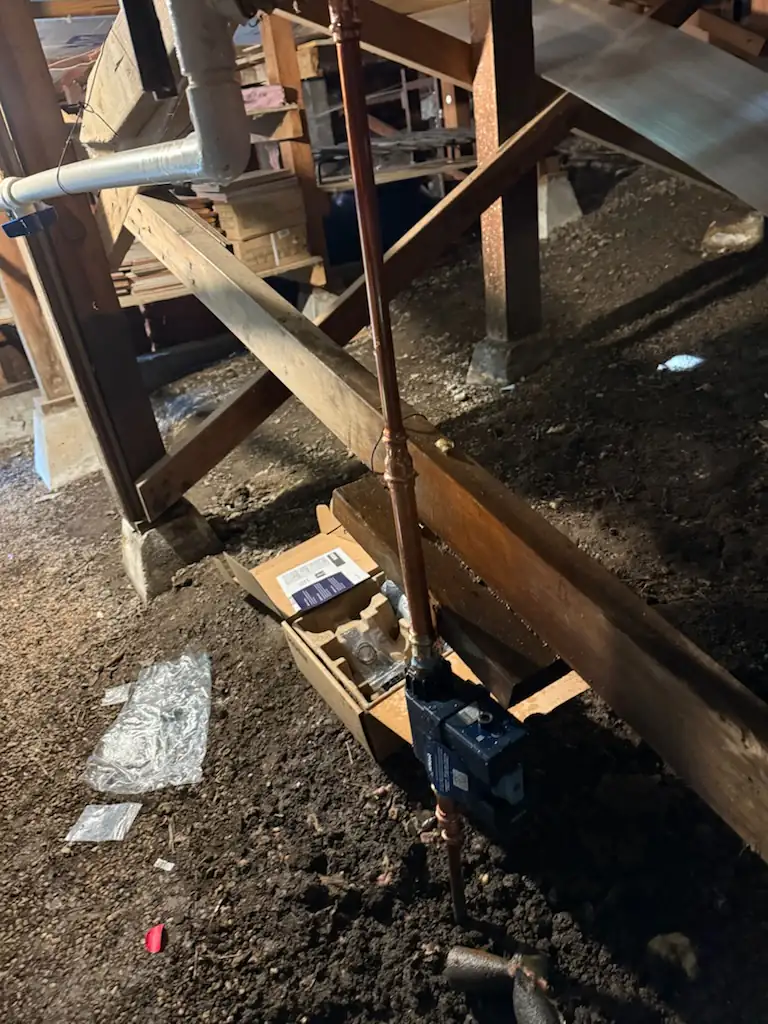
The first step is a quick assessment of your home’s main water supply line where it enters the house, what diameter pipe you’re working with, and whether there’s a nearby power outlet and Wi-Fi signal where the device needs to go. This matters because the Moen smart water monitor has to be installed after your water meter and pressure regulating valve to work correctly, and the right model depends on your pipe size. Getting this wrong at the start means the system either doesn’t function properly or doesn’t cover the whole house.
Once the right placement is confirmed, we install the device directly on the main line. In Sacramento, that often means working in a garage, a utility closet, or near an exterior wall locations that vary quite a bit between a 1940s Midtown bungalow and a newer build in Natomas. After the physical install, the Moen Smart Water App gets set up on your phone, alerts get configured, and the automatic shutoff gets tested so you can see it actually working before we leave.
That last part the app setup and hands-on walkthrough is where a lot of installations fall short. You end up with a device on your wall and no real idea how to use it. We don’t leave until you’ve seen the remote shutoff work and you know what to do when an alert comes through at 11pm on a Tuesday.
Ready to get started?
A water leak detector installation in Sacramento, CA through us covers the full scope device sizing, main line installation, app configuration, alert setup, remote shutoff testing, and a walkthrough so you actually know how to use what you paid for. We don’t hand you a manual and head for the door.
For Sacramento homeowners specifically, there are a few things worth knowing before installation day. Any work on your main water supply line requires a licensed C-36 contractor under California law which is why this isn’t a job for a handyman or an unlicensed tech who can place a sensor but can’t legally touch your main line. We handle the work correctly and in compliance with the California Plumbing Code (Title 24), so you’re not left with a liability question down the road.
The system also opens the door to real insurance savings. Many carriers offer 5% to 10% off annual premiums for homes with a professionally installed smart water monitoring system and in Sacramento County, where nearly 20% of flood insurance claims come from moderate to low-risk areas, that conversation with your insurance agent is worth having. Ask specifically about smart water shutoff devices when you call. The install pays for itself faster than most people expect.
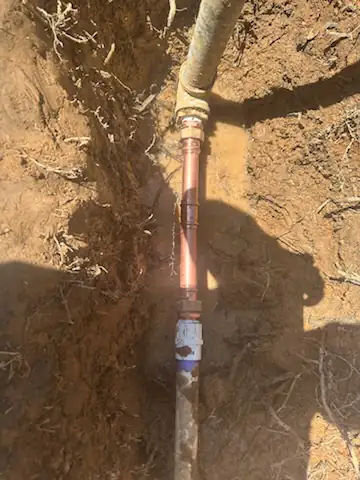
Whether a permit is required depends on the scope of work. Installing a whole-home smart water monitoring system like the Moen Flo requires physical work on your main water supply line, and that work must be performed by a licensed C-36 plumbing contractor under California law. Any plumbing project exceeding $500 in combined labor and materials requires a licensed contractor, full stop.
For permit specifics tied to your property and the exact scope of work, the Sacramento Community Development Department is the right place to confirm local requirements. What we can tell you is that the installation will be performed by a licensed contractor CA License #916322 in compliance with the California Plumbing Code, Title 24. You won’t be left guessing whether the work was done to code.
The system sits on your main water supply line and monitors flow 24 hours a day. It learns your home’s normal water usage patterns over time how much water moves through the line during a typical morning, when usage drops off overnight, what a normal shower or dishwasher cycle looks like. When something falls outside those patterns a slow drip that shouldn’t be there, a sudden pressure drop, flow that keeps running when everything in the house is off it sends an alert to your phone.
If you’re home, you can investigate and decide whether to shut the water off manually or through the app. If you’re not home which for a lot of Sacramento’s government and healthcare workers is a regular reality the system can be set to shut off automatically without any action needed on your end. That automatic shutoff is the feature that separates a smart water monitoring system from a basic sensor that just beeps and hopes someone is nearby to hear it.
Yes, and it’s worth asking your carrier about directly. Many homeowners insurance providers offer discounts of 5% to 10% on annual premiums for homes with a professionally installed smart water monitoring system. The logic is straightforward a home that can detect and automatically shut off a leak is statistically less likely to produce a large water damage claim, and insurers price that risk reduction into the premium.
In Sacramento County, this matters more than in a lot of other markets. Nearly 20% of flood insurance claims in the county come from moderate to low-risk areas meaning water damage isn’t just a problem for homes in designated flood zones. Homes in Midtown, East Sacramento, Land Park, and other neighborhoods away from the river still face real internal water damage risk from aging pipes, appliance failures, and slab leaks. A professionally installed system that reduces that risk and comes with documentation of a licensed installation is exactly what your insurance carrier needs to apply a discount. Call your agent and ask specifically about automatic water shutoff devices.
A basic leak sensor is a small device you place on the floor near a water heater, washing machine, or under a sink. It detects water contact at that specific spot and sounds an alarm. It’s better than nothing, but it only catches a leak if water reaches the sensor and it does nothing to stop the flow. If you’re not home when it goes off, the water keeps running.
A whole house leak detection system works at the main water supply line, which means it monitors everything flowing into your home not just one appliance or one room. It tracks flow rates and pressure continuously, which means it can catch a slab leak under your foundation, a slow pipe failure inside a wall, or a supply line that’s been dripping for days without ever producing a puddle on the floor. And when it detects something wrong, it can shut the water off automatically. For Sacramento homes with older plumbing, slab foundations on clay soil, or mature trees close to underground lines, the whole-house approach is the one that actually addresses the real risk.
Most installations are completed in two to three hours, start to finish. That includes the physical install on the main line, app setup, alert configuration, and a full test of the automatic shutoff so you can see it working before we leave. The total time can vary depending on where your main line is located and what access looks like a newer Natomas home with a clean garage utility setup is different from a 1940s Midtown bungalow where the main line runs through a tight crawl space or a utility closet with limited clearance.
You will need to be without water for a short period during the actual installation typically 30 to 60 minutes while the device is being fitted to the main line. We’ll let you know exactly when that window is so you can plan around it. The rest of the appointment assessment, app setup, testing, and walkthrough happens with your water service restored.
Honestly, older homes are exactly where this system makes the most sense. A home built in the 1950s in Sacramento whether that’s in Curtis Park, Land Park, East Sacramento, or Midtown likely has plumbing that’s at or past its expected lifespan. Copper and galvanized pipes from that era corrode at joints, develop pinhole leaks inside walls, and don’t give you any visible warning before they fail. The clay-heavy soil Sacramento sits on makes this worse, because that soil shifts with every wet season and dry summer, putting constant stress on pipes running beneath a slab foundation.
A smart water monitoring system doesn’t fix aging pipes that’s a separate conversation. What it does is give you the earliest possible warning when something goes wrong, and the ability to stop the water automatically if you’re not home when it happens. For a homeowner sitting on a Sacramento property worth $500,000 or more, the cost of a professionally installed smart leak detection system is a small number compared to the average water damage claim, which runs between $13,000 and $15,000. For an older home with original or near-original plumbing, it’s not a question of whether you need it it’s a question of whether you want to find out the hard way first.
Other Services we provide in Sacramento