
Hear from Our Customers
If your home is in Old Town Auburn or anywhere near the ravine neighborhoods, there’s a real chance your gas line has never had a seismic shut-off valve installed. That’s just the reality of older foothill housing stock. Victorians, mid-century ranch homes, early bungalows these Auburn properties were built long before California made seismic safety a priority, and most of them still don’t have this protection in place.
Once the valve is in, your gas line automatically shuts off the moment seismic activity crosses the threshold that matters. No manual intervention. No scrambling in the dark after a shake. The system does its job whether you’re home or not, whether it’s 2 p.m. or 2 a.m.
For Auburn homeowners already navigating a difficult insurance market Placer County’s Wildland-Urban Interface designation has made that market genuinely harder in recent years a properly permitted, DSA-certified valve installation is one of the few documented safety upgrades that can actually move the needle with your insurer. You get a paper trail, a permit record, and a concrete answer the next time your insurance company asks what you’ve done to reduce risk.
Murray Plumbing was founded in 2009 by Ryan Murray, and the license number C-36 #916322 is public record. You can verify it at cslb.ca.gov in under a minute. The C-36 classification is the specific license California requires for gas line and seismic valve work. Not every plumber offering this service holds it, and if something goes wrong with an unlicensed installation, that becomes your problem at resale, with your insurer, and potentially with the city.
Ryan and our team have been working in Placer County foothill homes for over 15 years including properties in Auburn’s older neighborhoods where meter configurations don’t always follow the suburban playbook. We know what a confined-space meter on a hillside lot looks like. We know the City of Auburn’s building department permit process, and we pull permits on every installation as a standard part of the job, not an optional add-on.
When you call Murray Plumbing, you’re reaching a real local operation not a regional brand that dispatches whoever’s available. That distinction matters when the work involves your gas line.
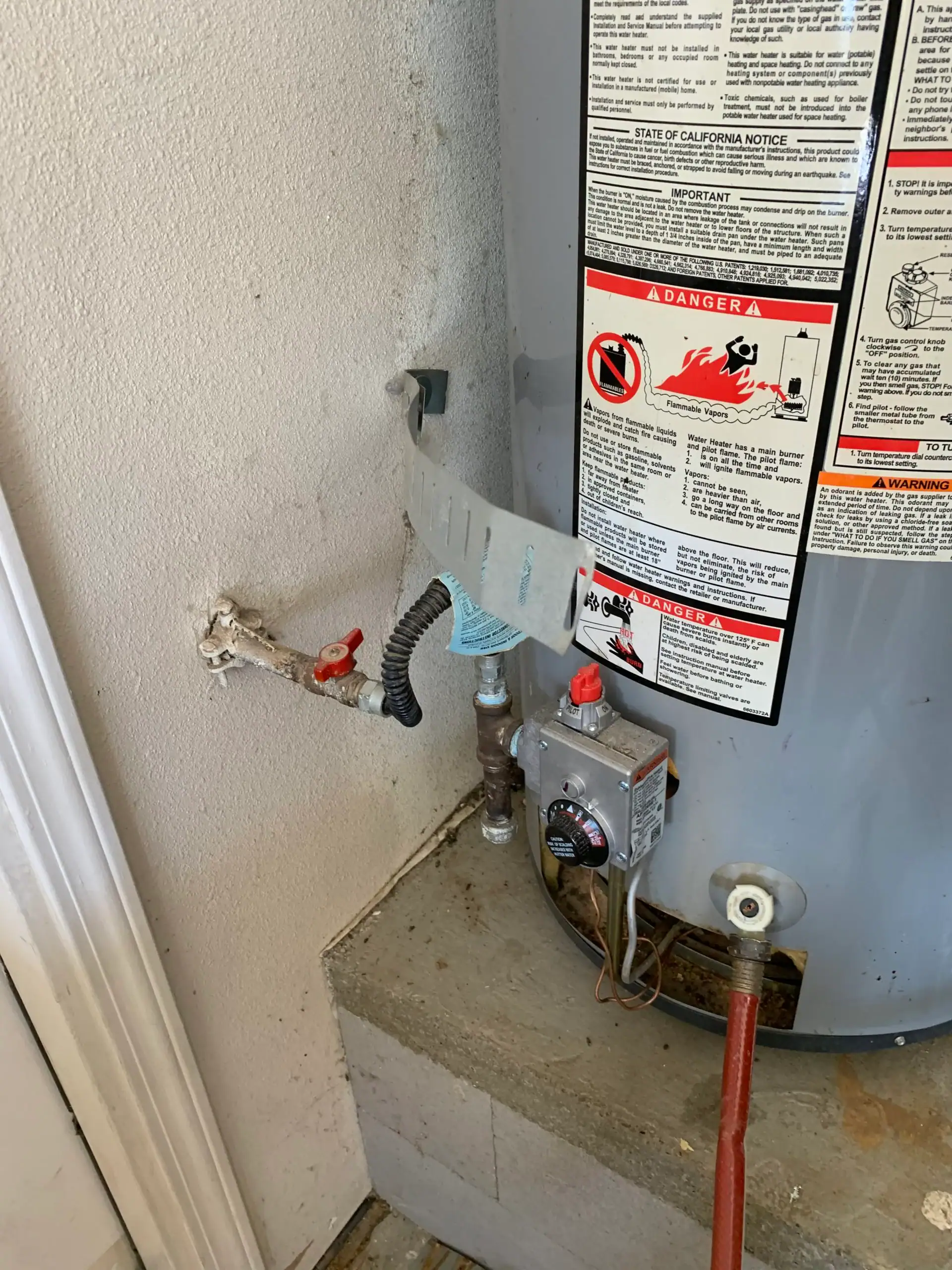
It starts with a free assessment before any commitment is made. This isn’t a sales call it’s a practical look at your meter configuration, access conditions, and whether any additional piping work is needed before a valve can be installed correctly. For homes in Auburn’s hillside neighborhoods or older areas near Auburn Ravine, that pre-installation look matters more than it does on a flat suburban lot with a standard meter setup.
Once the assessment confirms what’s needed, you’ll get a clear price in the $400–$650 range for most residential installations. That covers the DSA-certified valve, labor, permit fees, and the written documentation you’ll need for insurance or real estate purposes. If your specific situation puts the job outside that range, you’ll know before anything starts not after.
After installation, we pull the permit with the City of Auburn’s building department and schedule the final inspection. When that’s done, you receive a complete package: the permit record, valve certification documentation, and a written workmanship warranty. That paperwork has real value at your next insurance renewal, at your next real estate transaction, and any time you need to prove the work was done right.

Ready to get started?
Every Murray Plumbing earthquake valve installation in Auburn includes a DSA-certified valve the standard California’s Division of the State Architect requires for permit compliance and insurance documentation. This isn’t a hardware store valve. DSA certification means the device has been tested and approved to meet California’s seismic safety code, and it’s the only type of valve that satisfies the documentation requirements that actually matter when you’re talking to your insurer or disclosing at escrow.
The installation also includes the full permit process through the City of Auburn’s building department. For properties in unincorporated North Auburn, that goes through Placer County Building Services instead and we handle that process the same way. Either way, the permit gets pulled, the inspection gets scheduled, and you get the record. An installation without a permit is an unpermitted modification under California law, and that creates a disclosure obligation every time you sell.
One thing most installers skip entirely: the post-trip walkthrough. After your valve is in, we walk you through exactly what to do if it trips during a seismic event. The short version do not reset it yourself. A licensed plumber needs to inspect your lines for damage before the gas comes back on. That step protects you from the scenario the valve was installed to prevent in the first place.
Auburn sits within a region where USGS data puts the probability of a major earthquake within 50 kilometers at just under 32% over the next 50 years. That’s a real risk specific to this area. Beyond the seismic exposure, Auburn’s older housing stock adds another layer of concern. Homes in Old Town and the ravine neighborhoods were built with gas infrastructure that predates modern seismic safety standards by decades. Aging connections and older piping are more vulnerable to movement during a seismic event than newer construction.
The valve itself is a relatively small investment compared to what a gas leak or post-earthquake fire can cost financially, legally, and in terms of insurance coverage. If your home doesn’t already have one, the question isn’t really whether you need it. It’s whether you want to have the conversation before or after something happens.
For most residential installations in Auburn, the all-in cost runs between $400 and $650. That includes the DSA-certified valve, labor, permit fees, and the written documentation package. There are no separate line items for the permit or the paperwork those are standard parts of the job, not add-ons.
The range exists because Auburn homes aren’t all the same. A standard meter on a flat lot is a straightforward installation. A confined-space meter on a hillside property off Auburn Ravine Road, or an older meter configuration in a Victorian-era home near the Courthouse district, may require additional access work or modified piping. That’s exactly why the free pre-installation assessment happens before any price is confirmed. You’ll know your exact number before anything starts, and our customers consistently report that the final invoice came in at or below the original estimate.
Yes within the incorporated City of Auburn, earthquake valve installation requires a building permit issued by the city’s building department. That permit triggers a final inspection, and the completed inspection record becomes part of the city’s building database. It’s a searchable record that shows up in real estate transactions and satisfies insurance documentation requirements.
If your property is in unincorporated North Auburn rather than within the city limits, the permit goes through Placer County Building Services instead their Auburn office handles this for the surrounding foothill areas. Either way, the permit process is the same in terms of what you receive at the end: a legal record of a properly inspected installation. We handle the permit filing on every job. It’s not something you need to manage separately, and it’s not optional skipping the permit creates a disclosure obligation and potential insurance complications that follow the property, not just the current owner.
This is one of the most common concerns from homeowners in Auburn, and it’s a fair one. Highway 49 carries around 10,000 vehicles and 450 commercial trucks daily through key segments of the city. That’s a lot of vibration moving through the area on a regular basis.
DSA-certified seismic shut-off valves are calibrated to respond to the specific motion pattern of a seismic event not to the low-frequency rumble of truck traffic or the impact of a nearby door slam. The certification process includes testing against exactly these kinds of ambient vibration sources. A properly installed, DSA-certified valve should not false-trip under normal Auburn traffic conditions. That said, valve placement matters, and it’s one of the things we evaluate during the free pre-installation assessment. If your meter is in a location that creates unusual vibration exposure, that gets factored into the installation plan before anything goes in.
Potentially, yes and in the current Placer County insurance climate, this is worth taking seriously. Auburn sits within the Wildland-Urban Interface, which has led several major carriers to reduce or eliminate new policy offerings in the area. Many local homeowners have been pushed onto the California FAIR Plan, which costs significantly more than standard coverage and offers less protection.
A DSA-certified seismic valve, properly permitted and documented, is the kind of concrete, verifiable safety upgrade that insurers can actually evaluate. Some policies include premium discounts in the 5–15% range for documented seismic safety features. More importantly, having the permit record and certification documentation gives you something tangible to present during a policy application or renewal especially if you’re trying to qualify for a standard policy after a period on the FAIR Plan. It won’t fix the broader insurance situation in the foothills, but it’s one of the few things you can actually do that a carrier can verify and credit.
The valve has done its job your gas supply is shut off, and that’s the right outcome. What happens next is where a lot of homeowners get into trouble, because the instinct is to reset the valve and get the gas back on as quickly as possible, especially in winter when your furnace and water heater are both offline.
Don’t reset it yourself. Before the gas comes back on, a licensed plumber needs to inspect your gas lines for damage. A seismic event strong enough to trip the valve may have stressed or cracked connections elsewhere in your system. Resetting the valve and restoring gas flow into a compromised line is exactly the scenario the valve was designed to prevent. We’re available 24/7, including after seismic events, and post-trip inspections are part of what we handle. Every installation includes a walkthrough of this protocol so you know what to expect before it ever becomes relevant not in the middle of a stressful situation after the fact.
Other Services we provide in Auburn