
Earthquake Valve Installation
Get a free quote for earthquake valve installation from your local plumbing team.
We’ll contact you about your earthquake valve installation request. Privacy policy
Hear from Our Customers
The moment a significant earthquake hits, your gas shuts off automatically. You don’t have to be home. You don’t have to do anything. That’s the whole point the valve does the one job that matters most before a gas leak becomes something you can’t take back.
Campus Commons sits right along the American River, and that location comes with something most residents don’t think about: liquefaction risk. The alluvial soils along the riverbank are exactly the type that lose stability during seismic shaking, which means underground gas lines here are under more stress during an earthquake than they would be in a newer inland subdivision. A seismic valve doesn’t prevent that ground movement but it does prevent a ruptured line from filling your home with gas while you’re still figuring out what happened.
The housing stock here was built in the 1970s by a single developer across roughly 1,160 homes. That means most of these properties have been standing for 50 years without a seismic gas shut-off valve ever being installed. If you’ve lived in your Village One, Village Two, or Village Three home for years and never addressed this, you’re not alone and you’re also not out of time. One permitted installation, and that gap in your home’s safety profile is closed for good.
We hold California C-36 License #916322 the specific plumbing contractor classification required by state law for gas line and seismic valve work. You can verify it yourself at cslb.ca.gov in under a minute. That’s not a throwaway line. It’s an invitation, because most contractors won’t say it.
Ryan Murray founded this company, and his name is on every job. That kind of accountability doesn’t exist at a dispatch network or a private equity-owned service chain. When we show up at your home near the American River Parkway in Campus Commons, you’re getting a licensed professional who understands what’s at stake not whoever happened to be available that day.
With a 4.7 out of 5 rating across 93 Google reviews, our track record speaks plainly. Customers consistently mention punctuality, clear communication, and final invoices that matched or came in under the original estimate. In a community where residents expect professional work and have real equity to protect, that consistency is what actually earns a recommendation.
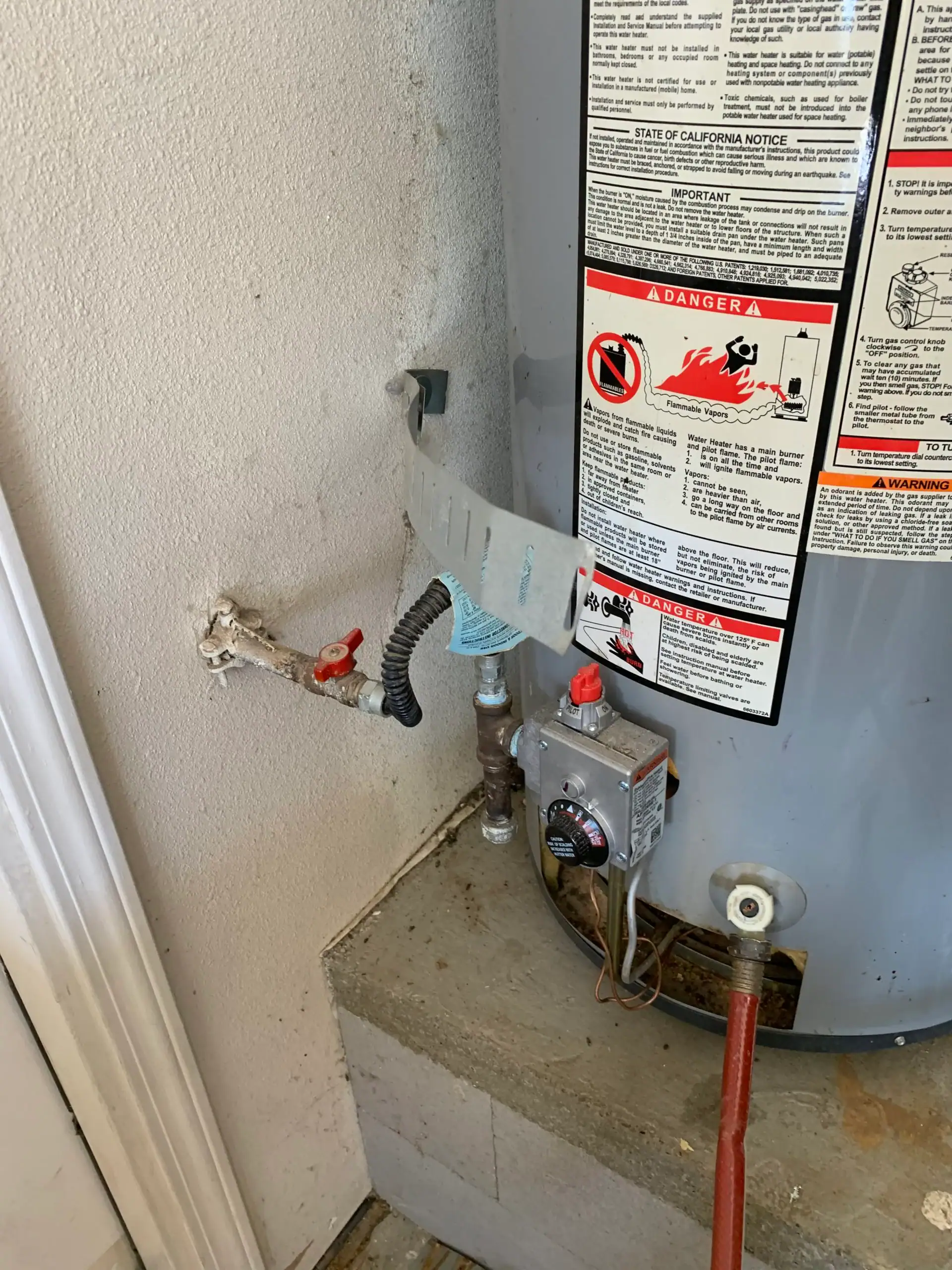
It starts with a free assessment. Before any money changes hands, a Murray Plumbing technician comes to your Campus Commons home, looks at your gas meter configuration, confirms the right DSA-certified valve for your setup, and gives you an exact price. The all-in range for most residential installations here runs $400–$650, covering the valve, labor, permit fees, and written documentation. If something about your specific setup pushes that number, you’ll know before work begins not after.
Once you approve the scope, the installation itself takes roughly two hours. Because Campus Commons falls within the City of Sacramento’s jurisdiction, all gas line work requires a City of Sacramento building permit. We pull that permit as a standard part of every job not as an add-on, not as something you have to ask for. The permit creates a legal record of the installation on file with the City, which matters when your insurer asks for documentation and matters even more when you eventually sell.
After the installation, a City inspector schedules a final walkthrough to sign off on the work. You get written documentation of the valve brand, model, and installation date. And before we leave, we walk you through exactly what to do if the valve ever trips because that part of the conversation is just as important as the installation itself.
Ready to get started?
Every earthquake valve installation we complete in Campus Commons includes a DSA-certified seismic shut-off valve the California Division of the State Architect certification required for permit compliance, insurance documentation, and real estate disclosure obligations. Only DSA-certified valves satisfy City of Sacramento permit requirements. A valve purchased online and installed without a permit doesn’t meet that standard, and it won’t hold up when your insurer or a buyer’s agent asks for documentation.
The installed valves are calibrated to detect earthquakes of 5.1 magnitude or higher and shut off gas supply instantly. That threshold matters in Sacramento, where the geological basin amplifies seismic waves from distant fault systems meaning a Bay Area earthquake can produce stronger ground shaking here than the source distance alone would suggest. The valve doesn’t care where the earthquake originated. It responds to the shaking at your meter.
PG&E serves Campus Commons and is your natural gas utility but PG&E explicitly does not install or service seismic-actuated shut-off valves. Their own website says so. What they do require is that any valve installed on your line be state-certified and installed by a licensed plumbing contractor. We check both boxes. If you’re also exploring earthquake insurance through the California Earthquake Authority, documented seismic safety upgrades like a permitted valve installation can qualify you for premium discounts of up to 25%.

California doesn’t have a statewide law requiring existing homeowners to retrofit earthquake shut-off valves but that doesn’t mean installation is optional in any practical sense. If you carry earthquake insurance through the California Earthquake Authority or a private carrier, your policy may require documented seismic safety measures as a condition of coverage or renewal. Insurers across California are tightening underwriting standards, and seismic valves are increasingly showing up as requirements rather than suggestions.
For Campus Commons specifically, the bigger trigger tends to be real estate transactions. When a home here goes through escrow, the inspection report will flag the absence of a seismic gas shut-off valve. Buyers and their agents often add it as a condition of closing. Having a permitted installation already on file with the City of Sacramento removes that friction entirely and it’s one less thing to negotiate when you’re trying to close on a timeline.
For most residential properties in Campus Commons, the all-in cost runs $400–$650. That range covers the DSA-certified valve, licensed labor, City of Sacramento permit fees, and written documentation of the installation. There’s no separate line item for the permit and no surprise charges at the end what you’re quoted after the free assessment is what you pay.
The main variables that can affect cost are meter accessibility and whether any additional work is needed on the gas line before the valve can be properly installed. Homes in Campus Commons were built in the 1970s, and while the gas infrastructure is generally consistent across the community, occasional aging connections or non-standard meter configurations can add scope. We identify any of those issues during the free pre-installation assessment before work begins, not after.
In almost every case, no. A seismic gas shut-off valve is installed at the gas meter on the exterior of the home it’s not a visible modification to the structure, the landscaping, or the shared common areas. HOAs in master-planned communities like Campus Commons typically have no objection to safety upgrades that don’t alter the exterior appearance of the home or affect neighboring units.
That said, if your specific sub-association whether you’re in one of the numbered villages, Nepenthe, East Ranch, University Park, or Wyndgate Condos has specific rules about contractor work or exterior modifications, it’s worth a quick check with your HOA board before scheduling. Our installations are clean, professionally executed, and leave the site exactly as it was found. The work is permitted through the City of Sacramento, which means there’s a formal inspection record the kind of documentation HOA-governed communities tend to appreciate, not question.
No. PG&E’s own website explicitly states that they do not install or service seismic-actuated gas shut-off valves. If you call PG&E and ask them to handle this, they’ll direct you to hire a licensed plumbing contractor. They also specify that any valve installed on your line must be certified by the State of California and installed according to manufacturer’s instructions by a licensed contractor.
This is one of the most common misconceptions that delays homeowners from acting the assumption that the utility company will take care of it, or that it’s somehow their responsibility. It isn’t. PG&E manages the gas supply to your meter. What happens at and beyond the meter is your jurisdiction. We hold California C-36 License #916322 and install only DSA-certified valves that meet PG&E’s stated requirements. That’s the combination you need to satisfy your utility, your insurer, and the City of Sacramento’s permit office.
Don’t reset it yourself at least not until your gas lines have been inspected for damage. When the valve trips, it means it detected ground movement significant enough to trigger the shut-off. That’s the valve doing exactly what it’s designed to do. Resetting it before confirming that your gas lines are intact can reintroduce gas into a damaged system, which is the exact scenario the valve was installed to prevent.
The right sequence is: call PG&E to report the event and request a line check, then call us for a post-event inspection of the valve and the surrounding gas line connections. Sacramento’s basin geology can amplify shaking from distant earthquakes in ways that feel minor but still stress underground infrastructure particularly in riverside areas like Campus Commons where the alluvial soils move differently than denser ground. We’re available 24/7, so if a late-night earthquake sends you looking for answers, someone will pick up.
Standard homeowners insurance policies exclude earthquake damage full stop. If you want coverage for seismic events, you need a separate earthquake policy, and in California, the California Earthquake Authority is the primary source for that coverage. The CEA offers premium discounts of up to 25% for documented seismic safety upgrades, and a permitted earthquake valve installation qualifies as exactly that kind of upgrade.
For Campus Commons homeowners specifically, the insurance angle has become more pressing as California carriers tighten underwriting standards across the board. Several major insurers have reduced or eliminated new homeowner policy offerings in the state, and those that remain are paying closer attention to documented safety measures when setting premiums and coverage terms. A permitted installation with a City of Sacramento permit on file and written documentation of a DSA-certified valve gives you something concrete to show your insurer. It’s not a guarantee of lower premiums, but it’s the kind of verifiable record that carries real weight when your policy comes up for renewal.
Other Services we provide in Campus Commons