
Get a free quote for plumbing repair from your local plumbing team.
We’ll contact you about your plumbing repair request. Privacy policy
Hear from Our Customers
You stop watching your water bill climb for no obvious reason. You stop second-guessing that warm patch on your floor or wondering why the pressure dropped on one side of the house. When plumbing repair is done right, those nagging questions go away — and they stay gone because the repair was built to last, not patched together until the next call.
For homeowners in Clay, that outcome matters more than it might in a newer neighborhood. Most homes here sit on slab foundations with plumbing lines embedded in concrete. Sacramento County’s heavy clay soil swells every wet season and pulls back during the long dry stretch from May through October. That cycle puts real stress on underground pipes and the joints connecting them — stress that doesn’t announce itself until a leak has already been running for weeks. Getting ahead of it, or fixing it properly the first time, protects the foundation, the flooring, and the structure above it.
Clay’s larger lots and mature landscaping add another layer. Older sewer laterals — many of them original clay pipe from decades past — sit directly in the path of tree root systems that have had 30 or 40 years to grow. When those roots find a joint, the problem compounds fast. A properly completed plumbing repair, whether that’s a sewer line clearing, a trenchless repair, or a full water line replacement, gives you back the confidence that your home’s systems are working the way they should.
We founded Murray Plumbing in 2009 after earning our contractor’s license and building this company one job at a time. There was no corporate playbook, no franchise system, and no call center dispatching strangers. Just a licensed plumber who knew Northern California homes and wanted to do the work right.
Today, we serve El Dorado, Sacramento, and Placer Counties — and Clay has been part of our service area from the start. We understand what unincorporated Sacramento County looks like in practice: larger lots, older systems, permits pulled through the county rather than a city building department, and homes that have been lived in long enough for the original plumbing to show its age.
Our 4.7 out of 5 Google rating across 93 reviews didn’t come from a marketing campaign. It came from jobs where the technician showed up on time, gave a price before touching anything, and fixed the problem so it didn’t come back. That’s the standard every call gets held to.
When you call Murray Plumbing, the first thing that happens is a real conversation — not a voicemail box and a callback window that stretches into tomorrow. You describe what’s going on, and a licensed plumber helps you understand whether it’s urgent, what it’s likely to involve, and when someone can be there. For genuine emergencies in Clay, that response window is 60 minutes.
Once on-site, our technician’s first job is to figure out exactly what’s happening before anything else. For slab-foundation homes — which describes most of Clay’s housing stock — that often means using leak detection equipment to locate the source without cutting into concrete blindly. For sewer issues, it means running a camera down the line to see what’s actually there: root intrusion, a collapsed section, a joint failure, or something else entirely. You get a clear diagnosis and a flat-rate price before any repair work begins. That price doesn’t change when the job is done.
Because Clay is unincorporated Sacramento County, plumbing permits are pulled through Sacramento County’s Building Inspection Division rather than a city hall. We handle that process — the permit, the inspection, the documentation — so the repair is done legally and your homeowner’s insurance coverage stays intact. After the work is complete, the technician walks you through what was done and why, so you’re not left guessing about the state of your own home.
Ready to get started?
We handle the full range of residential plumbing repair — and in Clay, that range gets used. Drain cleaning and hydro jetting for root-intruded sewer lines. Camera inspection to see what’s going on before recommending anything. Trenchless sewer repair for homeowners who don’t want their yard excavated to replace an aging lateral. Water line repair and full waterline replacement for properties where galvanized pipe has finally reached the end of its service life. Slab leak detection and repair for the homes where the problem is embedded in concrete and invisible from the surface. Water heater repair and replacement, including tankless and energy-efficient systems. And 24/7 emergency plumbing repair for the situations that can’t wait until morning.
For Clay residents specifically, the combination of clay soil, slab construction, and aging pipe materials means that what looks like a simple drain problem is sometimes the surface sign of something deeper. Our diagnostic process is built to tell the difference — and the flat-rate pricing model means you know the cost of the actual repair before committing to it, not after.
We also offer water softening and filtration services for properties dealing with mineral buildup from Sacramento County’s water supply — a common and often overlooked contributor to premature water heater failure and reduced fixture life throughout the area.
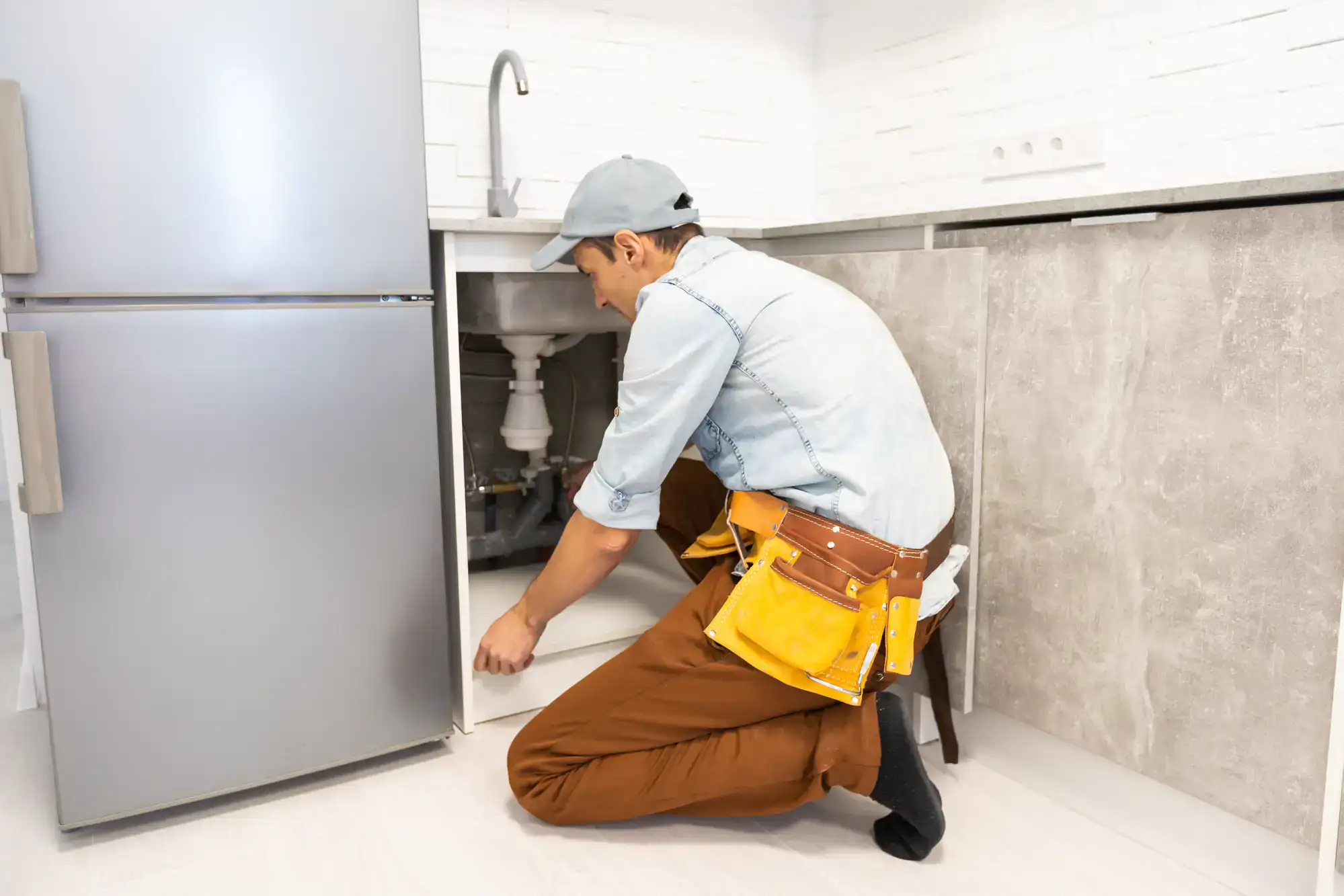
Slab leaks are common in Clay because most homes here are built on concrete slab foundations with plumbing lines running through or beneath the slab. The combination of Sacramento County’s expansive clay soil — which shifts seasonally as it absorbs winter rain and dries out through the long summer — and the age of many of these homes creates the conditions for pipe joints to crack or shift over time.
The signs aren’t always dramatic. A water bill that’s suddenly higher than usual without any change in your habits is one of the most reliable early indicators. You might also notice a warm or damp spot on the floor, low water pressure on one side of the house, or the faint sound of running water when everything is turned off. If you’re seeing any of those, don’t wait to see if it resolves on its own — slab leaks don’t improve, and the longer water runs beneath a foundation, the more expensive the secondary damage becomes. We use leak detection equipment to locate the source precisely before any concrete is disturbed, so you get a clear answer and a flat-rate repair cost before any work begins.
Low water pressure in Clay homes has a few common culprits, and the age of the home usually points toward which one is most likely. In older ranch-style homes — and Clay has plenty of them — galvanized steel pipes are often the cause. Galvanized pipe corrodes from the inside out over decades, and that buildup progressively narrows the interior diameter of the pipe. The result is reduced flow that gets worse gradually, often so slowly that homeowners don’t realize how bad it’s gotten until they compare it to a newer fixture or a neighbor’s house.
Mineral scale from the water supply is another contributor. Sacramento County’s water contains enough dissolved minerals to build up inside water heaters, pipes, and fixtures over time, which compounds the pressure issue in older systems. A slab leak can also mimic low pressure — water is escaping before it reaches the fixture, so less arrives. And in some cases, the pressure regulator on the main line has simply worn out. A licensed plumber can diagnose which of these is actually happening, because the fix for galvanized pipe replacement is very different from the fix for a failed pressure regulator — and treating the wrong one wastes time and money.
Yes, most plumbing repairs beyond simple fixture swaps require a permit in unincorporated Sacramento County — which is the jurisdiction that covers Clay. Permits are pulled through Sacramento County’s Building Inspection Division, not a city building department, since Clay has no city government of its own. This applies to work like water line replacement, sewer line repair, water heater replacement, and repiping projects.
This matters for a few reasons beyond just following the rules. If unpermitted plumbing work is discovered during a home sale inspection, it can complicate or derail the transaction. More importantly, California homeowner’s insurance policies can deny claims related to plumbing damage if the underlying repair work was done without proper permits or by an unlicensed contractor. We’re a C-36 licensed California plumbing contractor, and we handle the permit process for every job that requires one — pulling the permit, scheduling the inspection, and making sure the documentation is in order. You don’t have to navigate Sacramento County’s building department on your own.
Root intrusion is genuinely common in Clay, and the geography explains why. The community’s larger rural lots mean more mature trees — oaks, elms, and other established species with root systems that have had decades to spread. Sewer lines carry moisture year-round, which makes them a target for roots during Sacramento County’s long dry season when the surrounding soil offers very little water. Roots find the smallest gap in a pipe joint, enter, and then grow inside the line until they create a partial or complete blockage.
The problem is compounded in older properties where the original sewer lateral was made from clay pipe — literally fired clay, the same material the community is named for. Clay sewer pipe is brittle, porous at the joints, and particularly vulnerable to root intrusion as it ages. A camera inspection is the only reliable way to see what’s actually happening inside the line. If roots are found, hydro jetting can clear them. If the pipe itself has cracked or collapsed, trenchless sewer repair can often replace the line without excavating the yard — which matters a lot when the landscaping on a large rural lot took years to establish.
We use flat-rate pricing, which means the cost is agreed upon before any work starts — and that price doesn’t change based on when the call comes in. There’s no hidden after-hours surcharge added to the invoice at the end. What you’re quoted is what you pay, whether the call comes in at 9 in the morning or 11 at night.
The actual cost of a repair depends on what’s wrong. A straightforward drain clearing is a very different job from a slab leak repair or a water line replacement, and the pricing reflects that difference. What we won’t do is give you a vague verbal estimate and then present a different number once the work is done. Multiple customers have specifically noted in their reviews that the final invoice came in at or under the original estimate. For Clay homeowners who are calling because something has failed and they’re already dealing with a stressful situation, knowing the price upfront — and knowing it won’t shift — removes one significant source of uncertainty from an already difficult day.
If your home was built before the mid-1970s and you haven’t had the plumbing inspected recently, it’s worth finding out what you have. Galvanized steel pipe was the standard material for residential water supply lines for decades, and a lot of Clay’s older ranch-style homes were built with it. The issue is that galvanized pipe has a service life of roughly 40 to 70 years — and many of those pipes are now at or past that range.
Corrosion on galvanized pipe works from the inside out, which means the exterior of the pipe can look fine while the interior is significantly narrowed or compromised. You might notice discolored water, reduced pressure, or small leaks at joints before a full failure occurs. The good news is that proactive replacement — done on your timeline, with a flat-rate price agreed upon before work begins — is considerably less disruptive and less expensive than an emergency repipe after a pipe fails inside a wall or beneath a slab. A camera inspection or a basic assessment can tell you what you’re working with, so you can make an informed decision rather than waiting for the problem to force the issue.
Other Services we provide in Clay