
Kitec Repipe
Get a free quote for kitec repipe from your local plumbing team.
We’ll contact you about your kitec repipe request. Privacy policy
Hear from Our Customers
Kitec pipes don’t give you a warning before they burst. One day your water pressure drops. The next day, you’re standing in two inches of water watching your floors buckle and drywall turn to mush.
The question isn’t if your Kitec will fail. It’s when. Homes across Sacramento County saw installations during the late 90s and early 2000s, and those pipes started failing around 2005—about ten years after installation. If you’re still running on the original system, you’re past the point where waiting makes sense.
A full Kitec repipe in Clay, CA means we replace the entire system with copper or PEX—materials that last 70 to 80 years without the defects that made Kitec infamous. Your water pressure comes back. Your insurance stays intact. And you stop wondering if today’s the day you come home to a flooded house.
This isn’t a repair. It’s removing the problem completely so you can stop thinking about your pipes and get back to your life.
Murray Plumbing has been serving families across El Dorado County and the greater Sacramento area for over 15 years. We’re licensed, insured, and we show up when we say we will.
Clay homeowners don’t need a sales pitch. They need someone who knows how to repipe a house without tearing it apart, who quotes the real price upfront, and who finishes the job without surprises. That’s what we do.
We’ve repiped homes throughout the region, and we understand what it’s like to live in a smaller community where your reputation is everything. You’ll get the same crew from start to finish, and we’ll treat your home the way we’d want ours treated.
First, we walk through your home and map out where your existing Kitec lines run. We’re looking at how your plumbing is laid out, where we’ll need access, and what kind of finish work will be required after the new pipes go in.
Then we remove the old Kitec system and install new copper or PEX lines throughout your home. Most of the work happens in your attic, crawl space, and inside walls—we’re not ripping out entire rooms. You’ll have small access points cut into drywall where needed, but we keep the disruption as minimal as possible.
The actual repiping usually takes a few days depending on the size of your home. You can stay in your house during the work. We’ll need to shut off water at certain points, but we coordinate that with you so it’s not happening when you need to shower or cook dinner.
After the pipes are in, we handle the drywall repair, texture matching, and paint. You’re not left with a patchwork of holes to deal with. We close it up and make it look like we were never there.
Ready to get started?
A complete Kitec repipe in Clay, CA covers your entire hot and cold water system. That means every line running to your fixtures, appliances, and water heater gets replaced with new material—copper or PEX, depending on what makes sense for your home and budget.
We include all the finish work in our pricing. Drywall replacement, texture, paint—it’s part of the job, not an add-on you find out about later. The price we quote is the price you pay, and if anything changes during the project, we talk to you before we do the work.
Clay’s housing market has seen steady appreciation, with median home values around $732,700. A home with Kitec is a liability when it comes time to sell. Buyers either walk away or they knock tens of thousands off their offer to cover the repipe they know they’ll have to do. Replacing it now protects your investment and keeps your home marketable.
Most repipes for a standard 1 to 3 bedroom home in this area run between $5,000 and $30,000 depending on size, layout, and the extent of finish work required. We offer in-house financing if you need to spread the cost out, and we’ll walk you through what that looks like before you commit to anything.
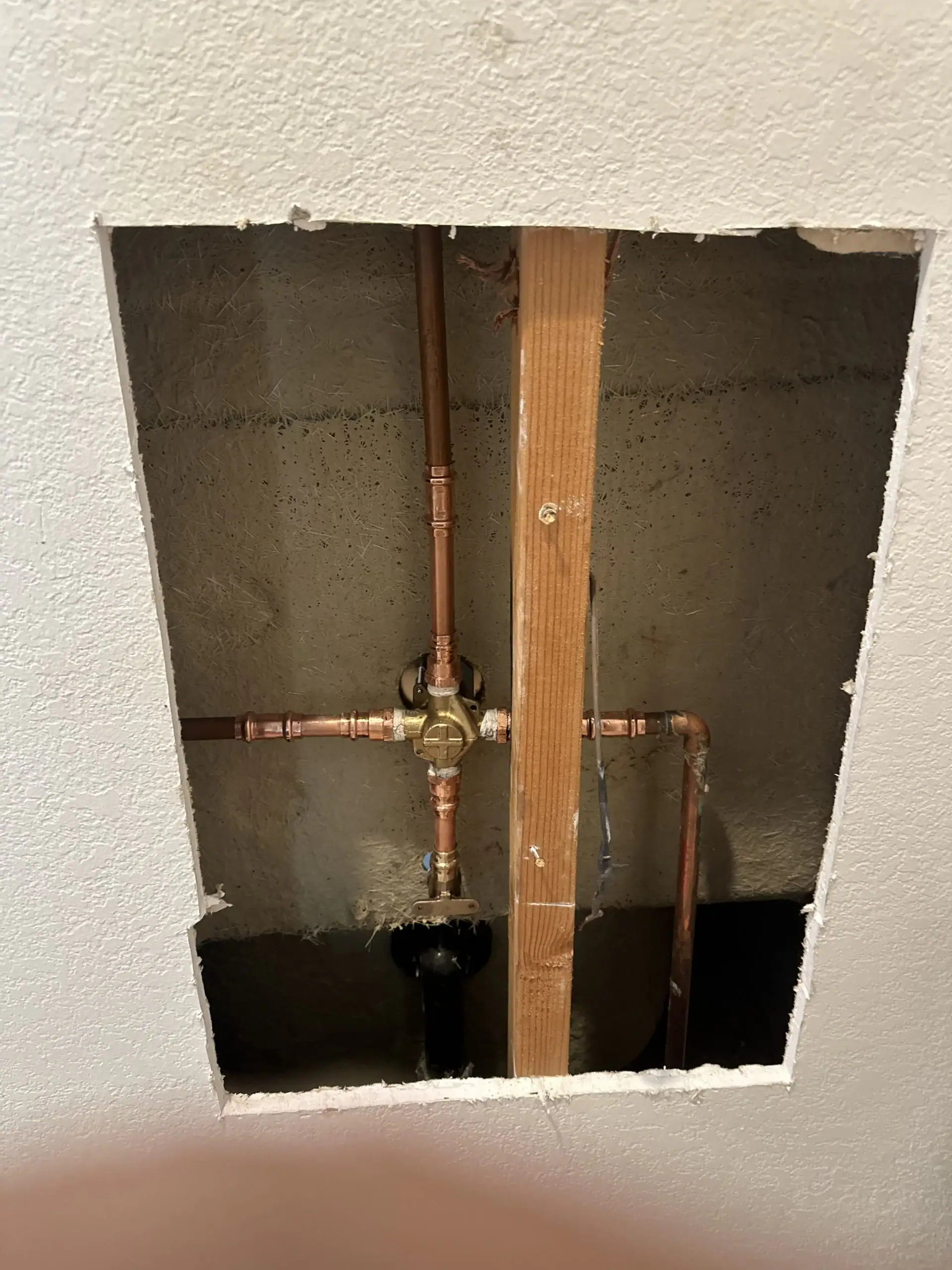
Most residential Kitec repiping jobs take between three and five days from start to finish. That includes removing the old Kitec system, installing new copper or PEX lines, and completing all the drywall and paint work.
The timeline depends on the size of your home and how accessible your plumbing is. A single-story house with an attic and crawl space usually moves faster than a two-story with limited access. We’ll give you a realistic timeframe during the estimate so you know what to expect.
You can stay in your home during the work. We’ll need to shut off your water at certain points during the day, but we coordinate those times with you. Most homeowners continue their normal routines—we’re just working in the background getting your new system installed.
For most homes in Clay, a full Kitec repipe costs between $5,000 and $30,000. The range depends on square footage, how many bathrooms you have, and whether your home has a basement, crawl space, or slab foundation.
Homes with easier access to plumbing lines cost less because the labor is simpler. Homes with complex layouts or limited access require more time and more finish work, which increases the price. We quote the full job upfront—including drywall, texture, and paint—so you’re not surprised by extra charges later.
If the cost feels steep, consider what you’re avoiding. A single Kitec failure can cause $20,000 to $50,000 in water damage, and insurance companies are increasingly reluctant to cover homes with known defective plumbing. The repipe is cheaper than the disaster, and it’s a one-time fix that lasts decades.
You can patch a leak when it happens, but you’re not solving the problem. Kitec fails because of a manufacturing defect—the brass fittings corrode and the pipe itself degrades over time. Fixing one section doesn’t stop the rest of the system from failing.
Most homeowners who try to repair Kitec end up spending thousands on multiple service calls over a few years, and they still have to repipe eventually. The patchwork approach costs more in the long run, and you’re still living with the stress of wondering when the next leak will hit.
A full Kitec repipe removes every inch of defective material and replaces it with copper or PEX that won’t fail. It’s the only way to actually fix the issue instead of just postponing it.
Insurance typically won’t pay for the repipe itself because it’s considered a maintenance issue, not sudden damage. However, many insurance companies in California are starting to flag homes with Kitec as high-risk, and some are refusing to renew policies or increasing deductibles significantly.
If your Kitec bursts and causes water damage, your insurance might cover the damage to your floors, walls, and belongings—but they won’t pay to replace the plumbing system that caused it. And if they find out you knew you had Kitec and didn’t replace it, they could deny the claim altogether.
The smarter move is to repipe before you have a failure. It keeps your insurance intact, protects your home value, and eliminates the risk of a claim denial when you need coverage most.
Copper is the traditional choice—it lasts 70 to 80 years, it’s durable, and it’s been the standard in residential plumbing for decades. It costs more upfront, but it’s proven and reliable. If you’re planning to stay in your home long-term or you want maximum resale appeal, copper is a solid option.
PEX is flexible plastic tubing that’s easier to install, costs less, and lasts up to 75 years. It’s resistant to corrosion and freezing, and because it’s flexible, it requires fewer fittings and connections—which means fewer potential leak points. It’s become the go-to material for repipes in many parts of the country.
Both are good choices. Copper feels more traditional and some buyers prefer it. PEX is faster to install and easier on your budget. We’ll walk you through both options and help you decide what makes sense for your home and your situation.
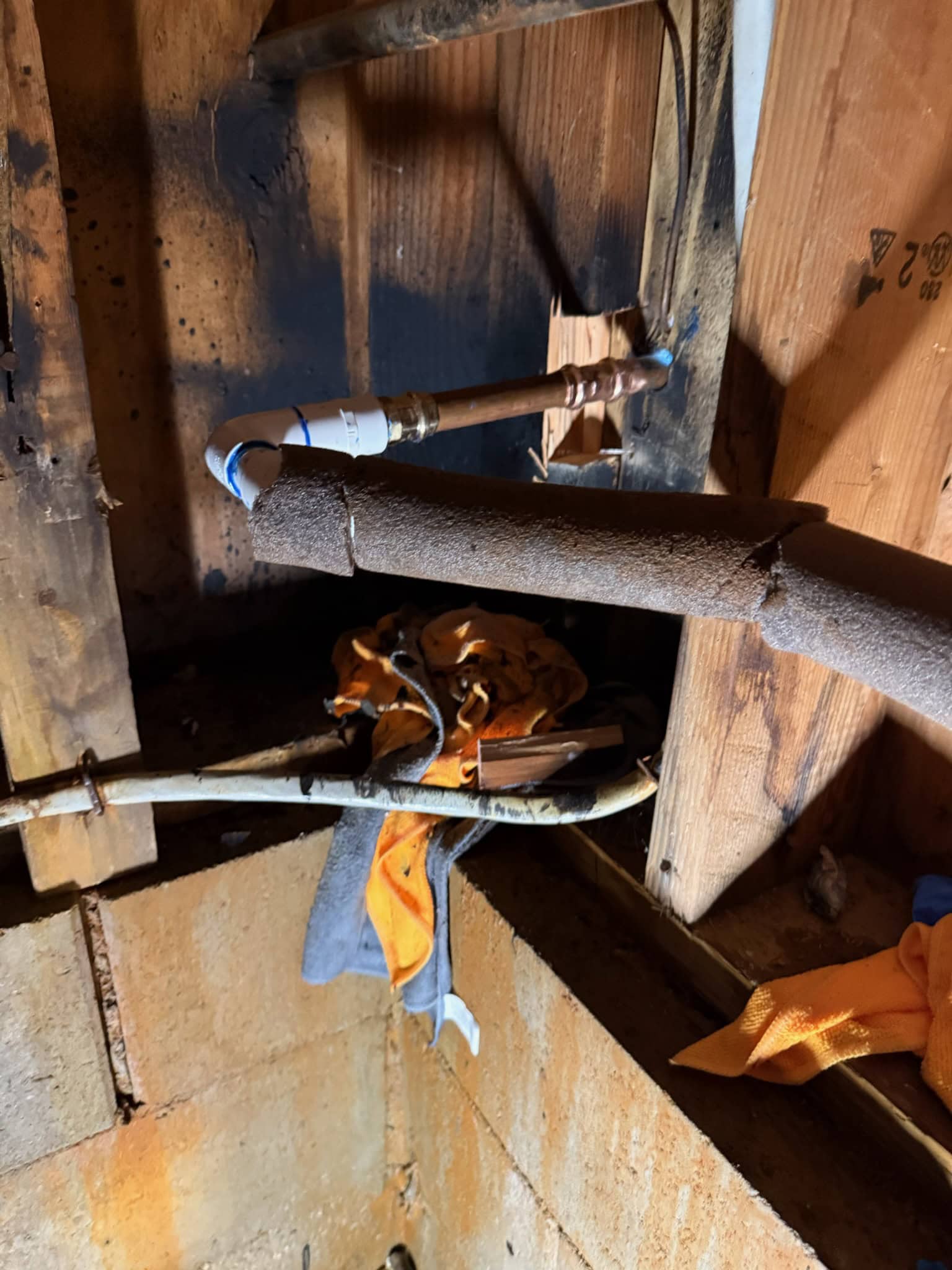
If your home was built or remodeled between 1995 and 2007, there’s a chance you have Kitec. The easiest way to check is to look at your exposed pipes—usually in the basement, crawl space, attic, or under sinks. Kitec pipes are typically orange or blue, and the fittings are brass-colored.
You might also see the Kitec logo stamped on the pipe itself, or labels that say “Kitec” or “KTC.” If you’re not sure what you’re looking at, take a photo and send it to us. We can tell you right away if it’s Kitec.
Even if you don’t see obvious signs, it’s worth having someone take a look if your home falls in that construction window. Kitec was widely used across Sacramento County during those years, and many homeowners don’t realize they have it until they start having pressure problems or leaks. A quick inspection gives you clarity and lets you plan ahead instead of reacting to an emergency.
Other Services we provide in Clay